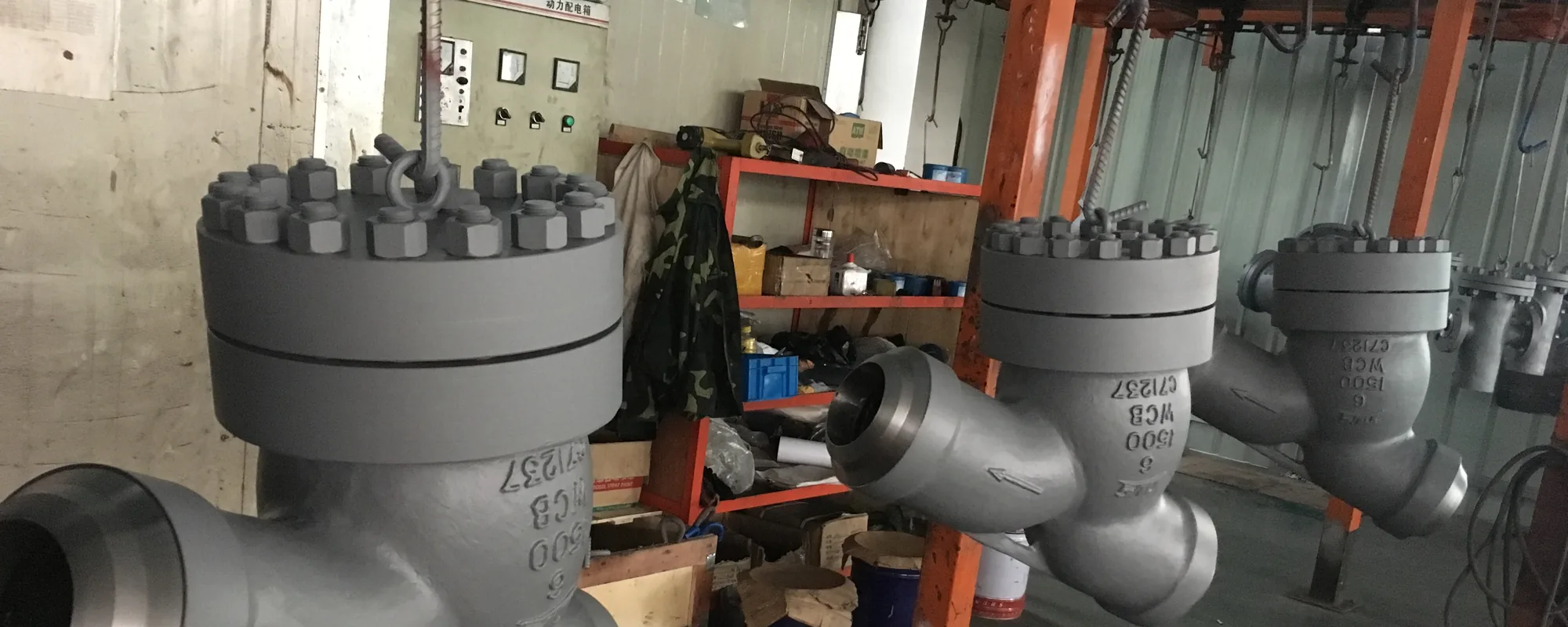
This is a starting point for material selection, not an answer. The answer comes from the ASME B16.34 rating table for the specific grade at your design temperature, and from your project specification. What this page gives you is the shape of the decision.
Body materials by temperature
| Grade | Specification | Practical upper limit | Typical use |
|---|---|---|---|
| A105 / A105N | ASTM A105 | ~425 °C | Feedwater, condensate, auxiliary steam, general forged small bore |
| WCB | ASTM A216 | ~425 °C | Cast equivalent of A105 for larger bores |
| F11 (1.25Cr-0.5Mo) | ASTM A182 | ~510 °C | Moderate-temperature steam, feedwater heaters |
| WC6 | ASTM A217 | ~510 °C | Cast equivalent of F11 |
| F22 (2.25Cr-1Mo) | ASTM A182 | ~540 °C | Reheat steam, high-temperature feedwater, older main steam |
| WC9 | ASTM A217 | ~540 °C | Cast equivalent of F22 |
| WB36 (15NiCuMoNb5) | EN / DIN | ~400 °C | European feedwater system designs - not an F22 substitute |
| F91 (9Cr-1Mo-V) | ASTM A182 | ~600 °C | Supercritical main steam and hot reheat |
| C12A | ASTM A217 | ~600 °C | Cast equivalent of F91 |
| F92 (9Cr-2W) | ASTM A182 | Above F91 | Ultra-supercritical, or where wall thickness must be reduced |
| F304 / F316 | ASTM A182 | ~550 °C, corrosion-driven | Auxiliary, chemical, and corrosive service - not selected for creep |
| F347H | ASTM A182 | ~650 °C | Austenitic option where the piping is austenitic |
Read “practical upper limit” carefully. These are indicative points beyond which the allowable stress falls to the extent that the required wall thickness becomes unreasonable. They are not code limits. The code limit for your case comes from the rating table for the class and grade you are actually buying.
Trim materials
| Material | Typical application | Notes |
|---|---|---|
| 13Cr / F6a | General seat and stem material | Standard trim for most power valves |
| F6NM (13Cr-4Ni) | Higher-strength stem, creep-grade valves | Better toughness than F6a |
| 422SS | High-temperature stem | Retains strength above the F6a range |
| Stellite 6 overlay | Seat and closure member faces | Cobalt-based, resists galling and erosion; standard for steam service |
| Stellite 21 | Where lower hardness with better toughness is wanted | Less common |
| Inconel 718 | Hinge pins, springs, high-temperature fasteners | Where 13Cr will not do |
| Tungsten carbide overlay | Abrasive service | Coal chemical, ash-bearing streams; not standard for steam |
Note that trim is a combination, not a single material. A trim specification names the seat, the closure member facing, the stem and the back seat. API 600 numbers some standard combinations; outside that scheme they have to be stated individually.
By system
| System | Typical condition | Body | Trim | Valve type |
|---|---|---|---|---|
| Main steam, USC | 25-31 MPa, 566-610 °C | F91, F92 | F6NM/422SS + Stellite 6 | Pressure seal gate; globe for drains |
| Main steam, subcritical | 17 MPa, 540 °C | F22, F91 | F6a + Stellite 6 | Pressure seal gate |
| Hot reheat | Lower pressure, 540-620 °C | F91, F92 | F6NM + Stellite 6 | Pressure seal gate |
| Cold reheat | Moderate both | F11, F22 | F6a + Stellite 6 | Gate or check |
| HP feedwater | Above drum pressure, 150-300 °C | A105N, F11, F22, WB36 | F6a + Stellite 6 | Pressure seal gate, check |
| Extraction steam | 0.05-5 MPa, 150-450 °C | A105, WCB, F11 | F6a + Stellite 6 | Swing check, powered |
| Boiler drains / blowdown | Drum pressure, flashing | A105N, F11, F22 | F6a + Stellite 6 | Globe, hardfaced |
| Auxiliary / gland steam | Low both | A105, WCB | F6a | Gate, globe, check |
Three things this table cannot tell you
Whether your specification permits the grade. Client specifications often restrict the acceptable list, sometimes to a single grade per system. That governs.
Whether the material is obtainable in your section and on your schedule. Availability of large F92 forgings is a real constraint, and a metallurgically optimal choice that cannot be delivered is not a choice.
Whether the weld is qualified. Matching a valve body grade to the pipe grade matters because the site weld has to be qualified for that combination and heat treated accordingly. A body grade that creates a dissimilar-metal weld at the site interface has consequences the valve datasheet does not show.
How to use this in an enquiry
Send the design pressure, design temperature, medium and - if you have it - the piping class extract for the line. We will state the grade we propose, the rating it gives at your condition, and any point where we would rather propose something different from what the specification names. That last category is the useful part of a technical response.