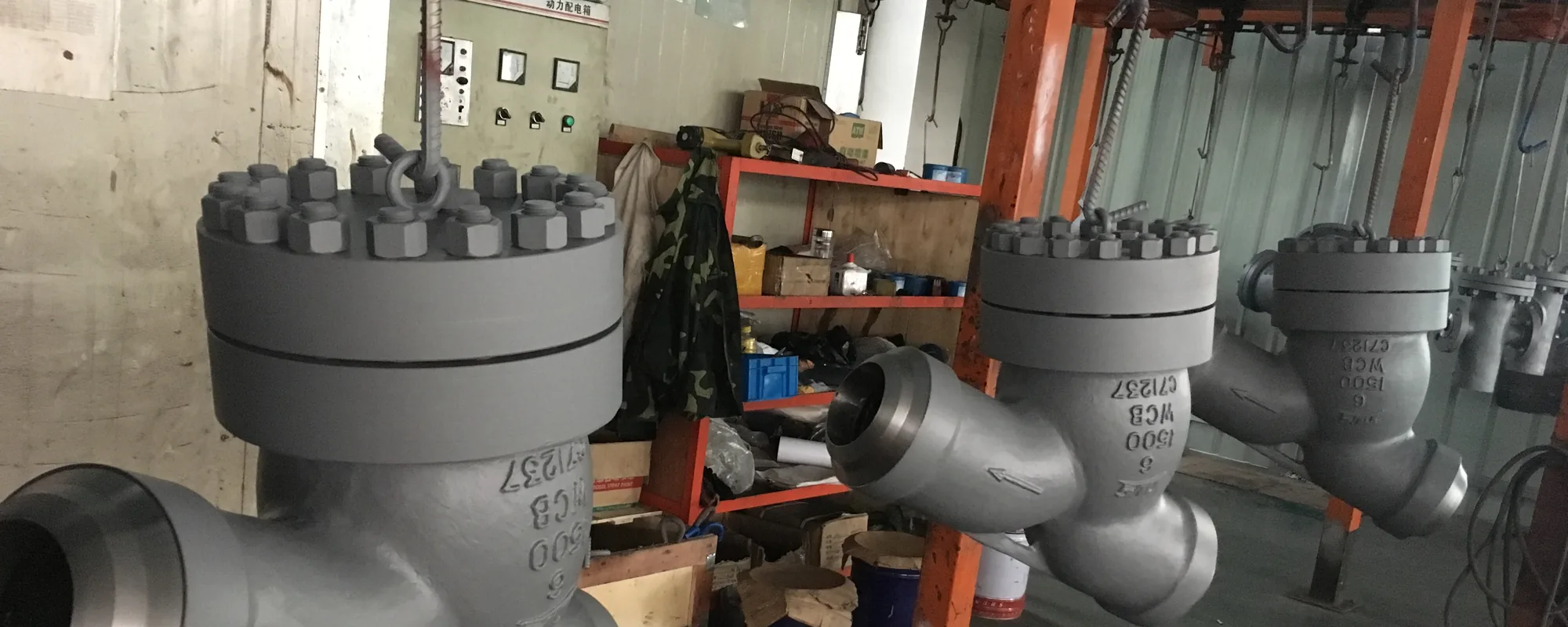
The main steam line carries more energy than anything else in the plant. Valve selection there is not difficult, but it has to be done in the right order, and the order is frequently wrong.
The right sequence
1. Material. Design temperature against the ASME B16.34 rating table decides the grade. Above roughly 540 °C, F22 stops being viable and you are into F91 or F92. This decision constrains everything after it - including lead time, because forging availability in creep grades is the real schedule driver.
2. Class. From design pressure and the rating for the grade you just selected. Not the other way round.
3. Valve type. Now, and only now, the easy question.
4. End connections. Butt weld, prepared to ASME B16.25 for your actual pipe schedule and grade.
5. Operator. Sized from the closing case at full differential.
Selecting type first, then discovering the material implications, means redoing the work. Selecting class before material means selecting it twice.
Valve type by position
Main isolation - gate valve. Full bore, minimum pressure drop on the highest-energy line in the plant. Pressure seal bonnet, flexible wedge, hardfaced seats. This is the default and it is usually right.
Boiler outlet on a multi-boiler header - stop-check. Each boiler needs both isolation and non-return protection so it cannot be back-fed from the common header. A stop-check does both in one body and one pair of welds. You give up full bore, which on a boiler outlet is normally an acceptable trade.
Drains, vents and warm-up - globe. These positions throttle. A gate valve throttled in flashing steam erodes. Plug-type disc with Stellite 6 overlay, under-the-seat flow.
Non-return in the line - check. Swing for low loss, piston lift where closure speed and stability matter more.
The flexible wedge question
On a gate valve in main steam, specify a flexible wedge unless you have a specific reason not to.
A solid wedge is stiffer and simpler. The problem is thermal distortion. When a hot valve is shut and the body cools unevenly, the seat faces move relative to each other. A solid wedge either binds - so the valve cannot be opened without excessive force - or it is set loose enough not to bind and then does not seal well.
A flexible wedge has a circumferential groove that lets the two faces move independently. It absorbs the distortion. On a plant that starts and stops frequently, this is the difference between a valve that operates and one that has to be worked on at every outage.
Butt weld ends: send the pipe specification
The bevel geometry and the bore of a butt weld end are prepared to ASME B16.25 for a specific pipe outside diameter, wall thickness and material. “NPS 12 BW” is not enough information.
Two things go wrong when it is not confirmed:
Bore mismatch. The valve bore and the pipe bore do not match, leaving a step in the flow path. On a high-velocity steam line this causes turbulence and, over time, erosion at the weld.
Wall thickness mismatch. A transition taper is required, and if the valve was prepared for a different schedule the site has to machine one - at height, on a critical path, in a creep-grade material that needs controlled PWHT.
Send the pipe specification and schedule with the enquiry. It costs nothing at that stage and a great deal later.
Warm-up provision
On large main steam isolation valves, opening a cold valve into hot steam is a thermal shock. Where the operating procedure requires the downstream side to be warmed first, either an integral bypass around the valve or a separate warm-up valve is fitted.
Whether you need one depends on the line, the operating procedure and the valve size. It is worth deciding at the specification stage - adding a bypass connection to an existing valve body is not a field modification.
Operator sizing
The governing case for a gate valve is unseating against full differential pressure. For a globe valve with under-the-seat flow, it is closing against full differential. These are different cases and they give different thrusts.
Give the supplier the maximum differential pressure across the valve, not just the design pressure. On an isolation valve that may be opened against a depressurised downstream side, the differential is the design pressure - but on many positions it is not, and sizing for the wrong case gives you either an actuator that cannot move the valve or one that is three sizes too big.
What we ask for
- Design pressure and design temperature
- Maximum differential pressure across the valve
- Pipe specification, grade and schedule for the connecting pipe
- Number of expected start-stop cycles over the design life, if known
- Whether the unit two-shifts
- The client valve specification, if there is one
The cycle count question surprises people. It is asked because a valve for a base-load unit and a valve for a two-shifting unit are the same on the datasheet and different in what will actually matter over twenty years.