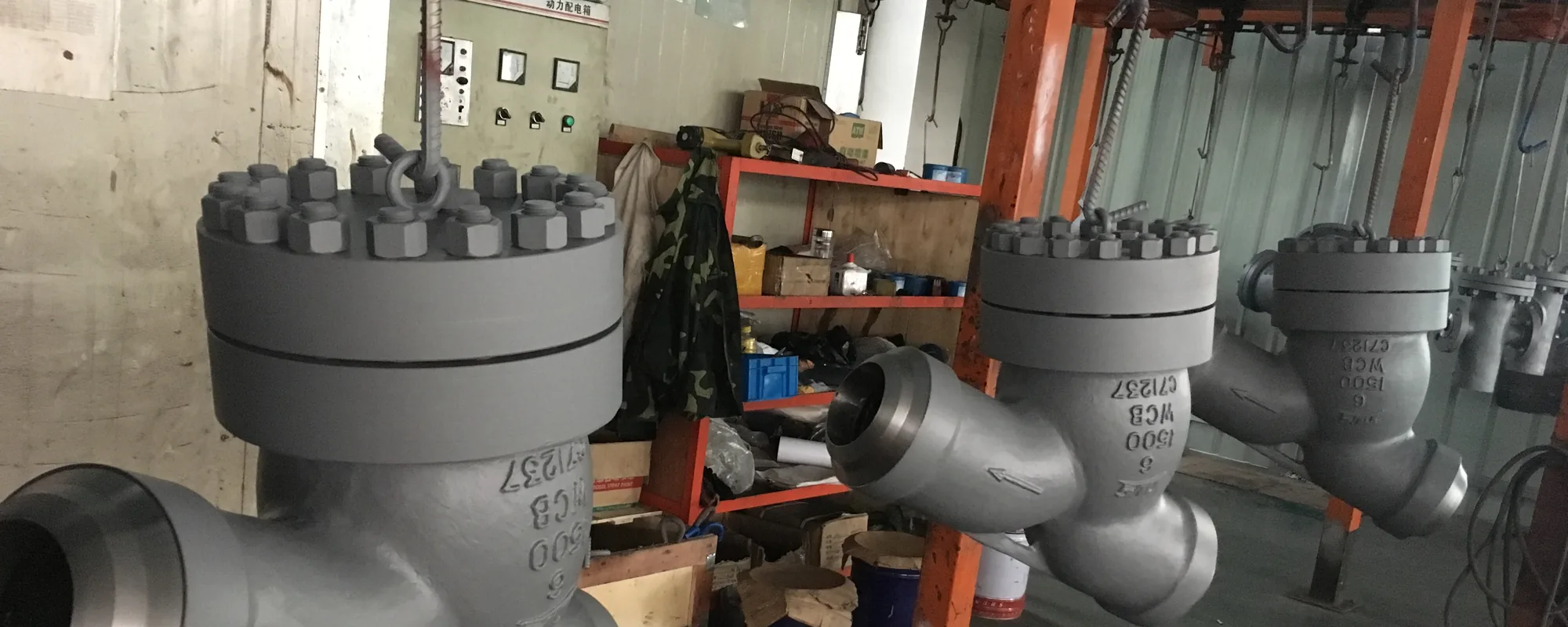
A great many coal and gas units were designed for base load and now cycle daily. The valves on those plants are seeing an operating profile the original specification never described, and the failure modes have changed accordingly.
If your unit two-shifts or load-follows, it is worth saying so at enquiry. It changes what matters.
What cycling does to a valve
Differential thermal expansion. Thick and thin sections of the same valve heat and cool at different rates. The body neck reaches temperature before the thick seat region does. The result is distortion - small, but repeated.
Gasket and bolt relaxation. Every cycle takes a little preload out of a bolted joint. Base-load plants might see this over decades; a two-shifting plant sees it in years.
Wedge binding. A solid wedge in a body that has distorted during a hot shutdown can jam. The valve then cannot be opened without excessive force, which damages the stem, the yoke bushing or the seat.
Thermal fatigue at geometric discontinuities. Sharp section changes concentrate the cyclic strain. Over enough cycles, cracks initiate there.
Creep-fatigue interaction on creep grades. In F91 and F92, cyclic loading and creep damage do not simply add - they interact, and the combined damage accumulates faster than either alone would suggest.
The construction features that help
Pressure seal bonnet. This is the clearest benefit. There is no bolt load to relax, and the joint tightens with pressure rather than depending on a preload that decays with every cycle. On a cycling plant, the maintenance saving on bonnet joints is a substantial part of the argument for pressure seal construction - separate from the pressure argument.
Flexible wedge. The circumferential groove lets the two wedge faces move independently and absorb body distortion. This is the direct answer to wedge binding after hot shutdown, and it is the single most useful specification choice for a cycling main steam gate valve.
Generous section transitions. Avoiding sharp changes in wall thickness reduces the strain concentration at the discontinuity. This is a design detail rather than something a buyer specifies, but it is a reasonable thing to look for on the GA drawing.
Reduced wall where the rating allows it. Thinner sections come to temperature more evenly and generate lower thermal stress. This is part of the argument for F92 over F91 on some duties - not raw strength, but the ability to achieve the rating in a thinner wall.
Full-length stem guidance. Prevents the closure member cocking as the body flexes.
What does not help
Rounding up the pressure class. A heavier valve has thicker sections, which take longer to equalise and generate higher thermal stress during transients. On a cycling duty, over-specifying class can make thermal behaviour worse, not better.
Harder seat overlay. Cycling damage is not primarily wear. Harder facing does not address distortion.
More bolting. On a bolted bonnet, adding bolts does not stop relaxation - it distributes it.
What to tell a supplier
The useful information is:
- Expected number of start-stop cycles over the design life. Even an order of magnitude helps - 500 cycles and 10,000 cycles are different design problems.
- Cold, warm and hot start distinction, if the operating regime distinguishes them. A cold start is the demanding thermal case.
- Typical ramp rates.
- Whether the valve is in a line that stays hot between starts or cools fully.
- Any history of wedge binding or bonnet joint leakage on the existing valves.
That last one is the most valuable and the least often offered. If the plant already has a valve failing in a particular way, that is a direct statement of what the replacement has to do better.
An honest limit
We can select construction features that suit cycling duty, and we can explain why each helps. What we cannot do is give you a cycle-life figure for a valve. That would require a fatigue analysis against your actual thermal transients, and it would depend on assumptions about ramp rates and start types that only your operations data supports.
Where a project genuinely needs a quantified life assessment, that is engineered scope - an FEA against your defined transients, priced and scheduled explicitly. It is not something that should appear as a number on a catalogue datasheet, from us or from anyone else.