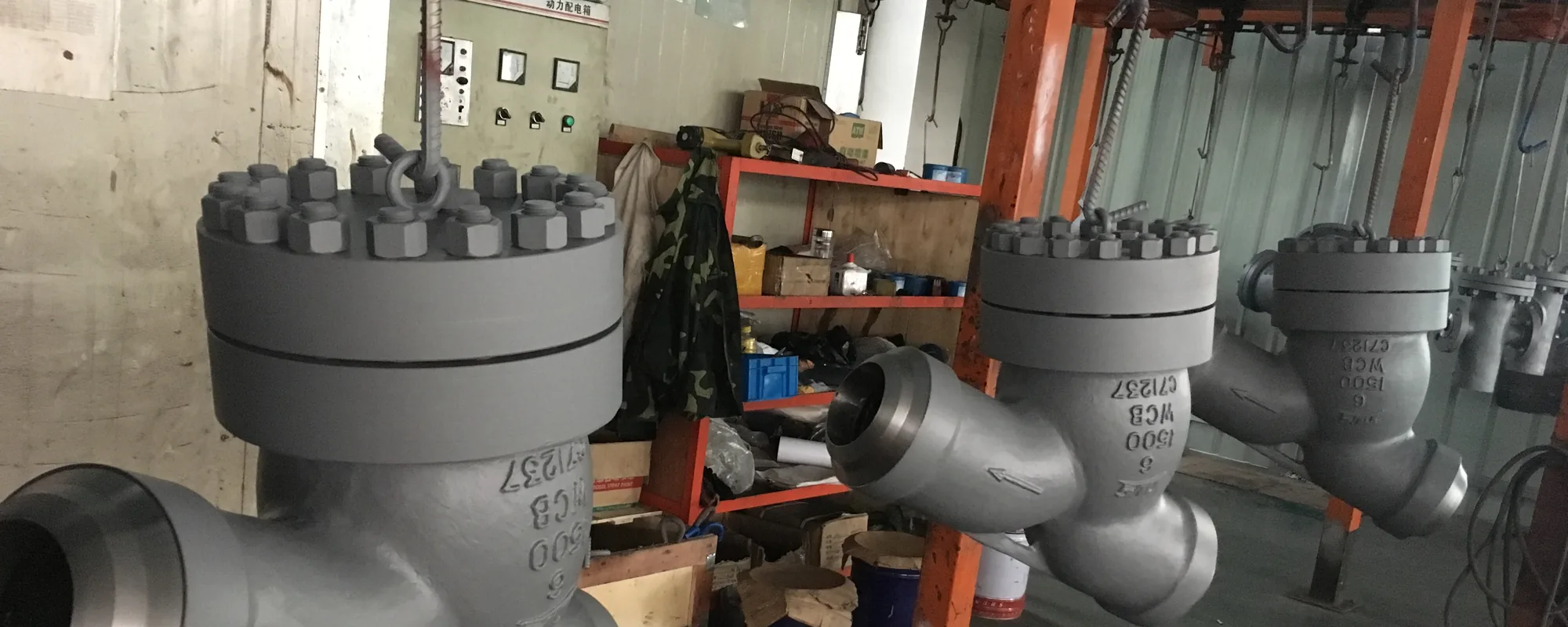
Power plant and power station valves
A power plant valve is not a product type. It is a position in a system, and the position sets the requirement. Main steam takes the highest metal temperature and needs creep-grade material. Feedwater takes its class from the pump shut-off head rather than from the drum pressure. Extraction is designed for what happens on a turbine trip, not for normal running. Blowdown is a wear duty at high pressure drop. This page collects the valves for those positions and links each one to the system page that explains why it is specified that way.
- Systems
- Main steam, reheat, feedwater, blowdown, bypass
- Valve types
- Gate, globe, check, stop-check
- Pressure rating
- Class 600 - 4500
- Temperature
- to 650 °C
- Materials
- A105, F22, WC9, F91, C12A, F92, WB36
- End connection
- BW, RF, RTJ
Product range
This is a service category: it describes a duty rather than a construction, and the valves that answer it are published under the construction that defines them. The selection table, materials and standards below apply to all of them.
Selection follows the system, not the catalogue
The same nominal size and class can mean four different valves depending on where it sits. On main steam the governing question is whether the body material holds its rating at peak metal temperature, and the answer moves through F22, F91 and F92 as steam conditions rise. On feedwater the governing question is the pump curve, because the valve sees shut-off head rather than normal operating pressure, and cavitation on the seat is the usual wear mechanism. On extraction the governing question is how fast the check valve closes when the turbine trips, because slow closure lets steam and condensate back into the turbine. Specifying by size and class alone gets one of these right and the other three wrong.
Design features
Material selected against peak metal temperature
Not against nominal steam temperature. The rating that matters is the ASME B16.34 value for the actual grade at the actual design temperature, stated on the datasheet.
Pressure seal construction above Class 900
Removes bolt preload as a maintenance item on units that cycle, which is now most units rather than a few.
Hardfaced seats on steam duty
Stellite 6 overlay where high-velocity steam and repeated closure would otherwise erode the seating surfaces.
Closure characteristics stated for check valves
On extraction and feedwater the closure behaviour on a trip is a design requirement, not an incidental property, and it is stated rather than left to the buyer to assume.
Document package built for an inspector
MTC, PMI, NDE, heat treatment charts, hydro and seat test reports and the dimensional record, issued against the ITP agreed before manufacture.
Selection table
A first cut at gate, globe, check or stop-check. The values are catalogue ranges, not a commitment for a specific item.
| Product type | Body | Class | Temperature | Typical service |
|---|---|---|---|---|
| Main steam gate valve | Forged or cast | 1500 - 4500 | 540 - 650 °C | Boiler outlet to turbine stop valve |
| Feedwater check valve | Forged or cast | 1500 - 4500 | to about 380 °C | Pump discharge and heater isolation |
| Extraction steam check valve | Cast or forged | 150 - 900 | to about 450 °C | Turbine extraction, trip protection |
| Blowdown and drain globe valve | Forged | 900 - 2500 | to about 400 °C | Continuous and intermittent blowdown |
Materials
The grade is selected against the rating at your design temperature. The full matrix, with the reason each grade exists, is on the material matrix page.
| Material | Typical service | What decides whether it is right |
|---|---|---|
| A105 / F36 | General high-pressure steam and water | Forged carbon steel. Cheap and well understood, but it loses allowable stress quickly with temperature, so it has to be checked against the rating table rather than assumed. |
| F22 / WC9 | High-temperature steam | Chromium-molybdenum. The workhorse above the carbon steel limit, with useful creep strength and straightforward welding compared with the martensitic grades. |
| F91 / C12A | Supercritical steam | Modified 9Cr-1Mo. Much higher creep strength, but only if the heat treatment window was held. The furnace and PWHT charts are the evidence that it will perform, not the grade name. |
| F92 | Ultra-supercritical steam | Higher creep strength again at the top temperature and class combinations, with a narrower processing window than F91 and correspondingly less tolerance for error in heat treatment. |
| WB36 | High-pressure feedwater | High-strength low-alloy steel used where feedwater pressure rather than temperature governs, allowing a thinner wall than a carbon steel equivalent at the same class. |
| F347 | High-temperature corrosive media | Stabilised austenitic stainless. Selected for corrosion resistance and for stability against sensitisation, not primarily for creep strength. |
Applications
- Thermal power: main steam, reheat, feedwater, blowdown, turbine bypass
- Combined heat and power, and cycling units
- Nuclear power: main steam and main feedwater isolation
- HRSG high, intermediate and low-pressure circuits
- Concentrated solar power: molten salt loops
Standards and testing
Listed only where the standard actually governs something on these valves. What each one covers on a specific item is stated on that item's page.
Downloads
Catalogue, datasheets, material guide, pressure-temperature rating tables and the RFQ datasheet are collected in resources. Files carry a version date and use searchable text rather than scanned images.
Frequently asked questions
Do you supply the whole valve list for a unit?
Not the whole list. This range covers high-temperature steam, feedwater and severe process positions. Cooling water, compressed air, general utility and control valves are outside it, and we will say so on the line rather than quote them and sub-contract.
What do you need to quote a power plant valve list?
Medium, design pressure, design temperature, class, size, body and trim material, end connection and operator, per line. Nine data points. Where a line is missing one, we will come back with the question rather than assume, because assuming is how the wrong valve gets delivered.
Can you match an existing valve for replacement?
Usually, from the nameplate data and the face-to-face dimension. Send the nameplate photograph and the installed face-to-face and we will confirm what will drop into the existing spool without pipework modification.
Related
Ask for a quotation
Send a valve list and we answer line by line, including the lines where we would need a deviation and the lines where we think the wrong valve has been specified.