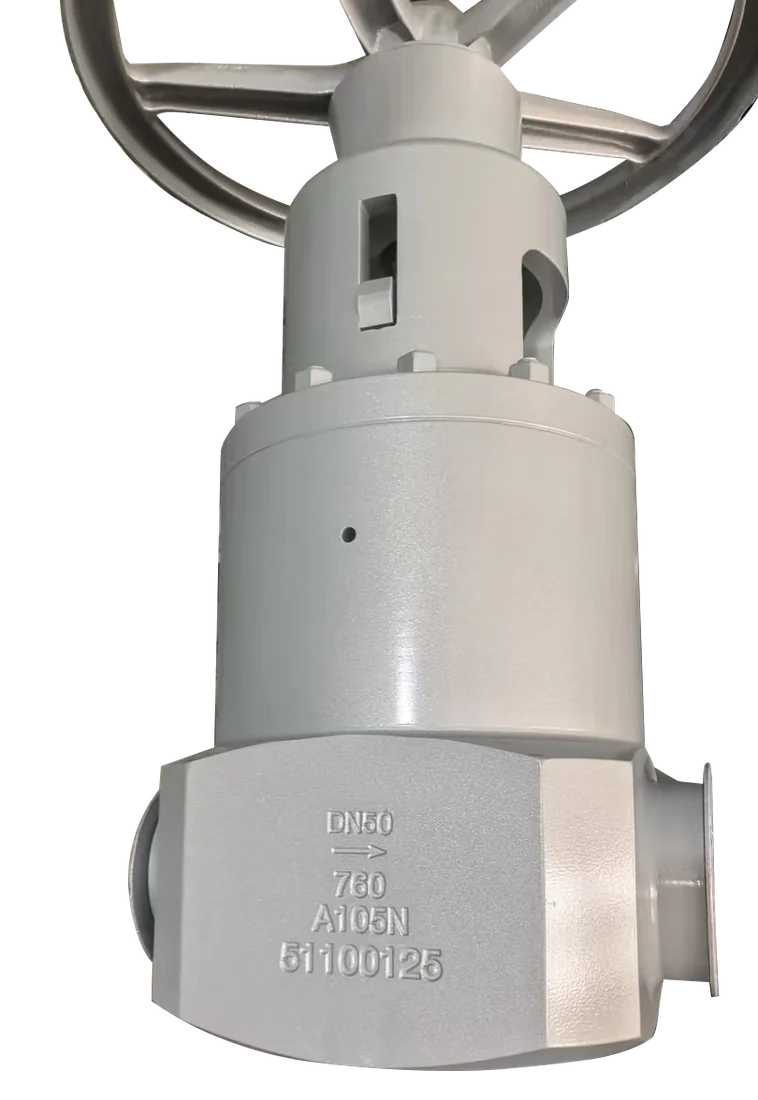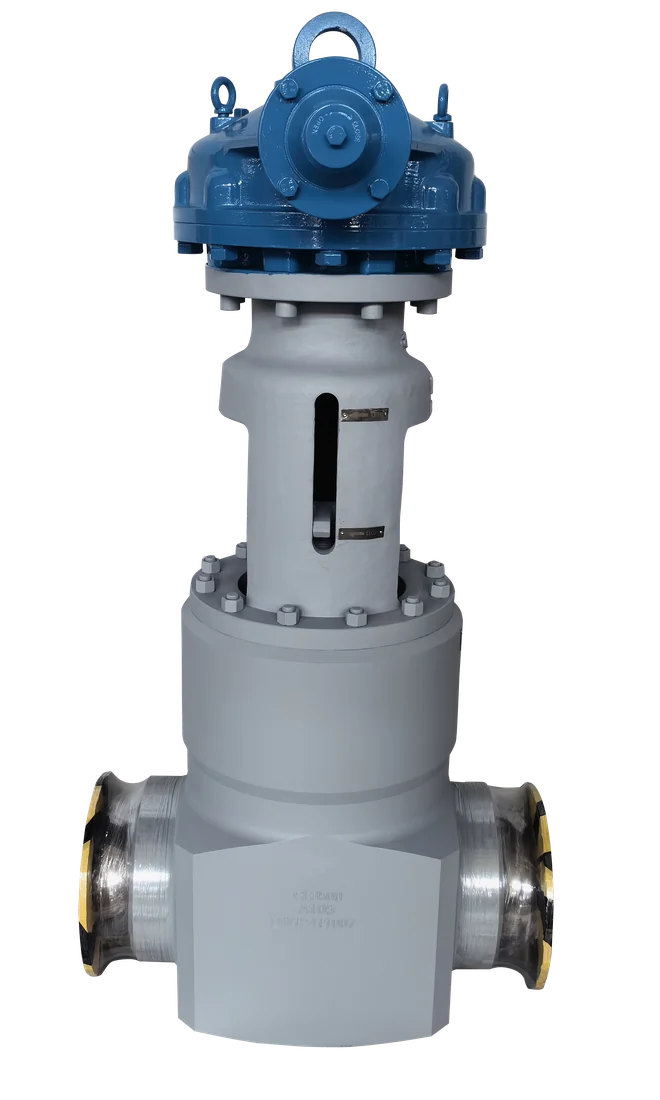
High Pressure Gate Valve
gate · bolted + pressure seal
- Size
- NPS 2 - 24 (DN 50-600) (test)
- Class
- Class 600 - 2500
- Temp
- up to 425 °C / 800 °F
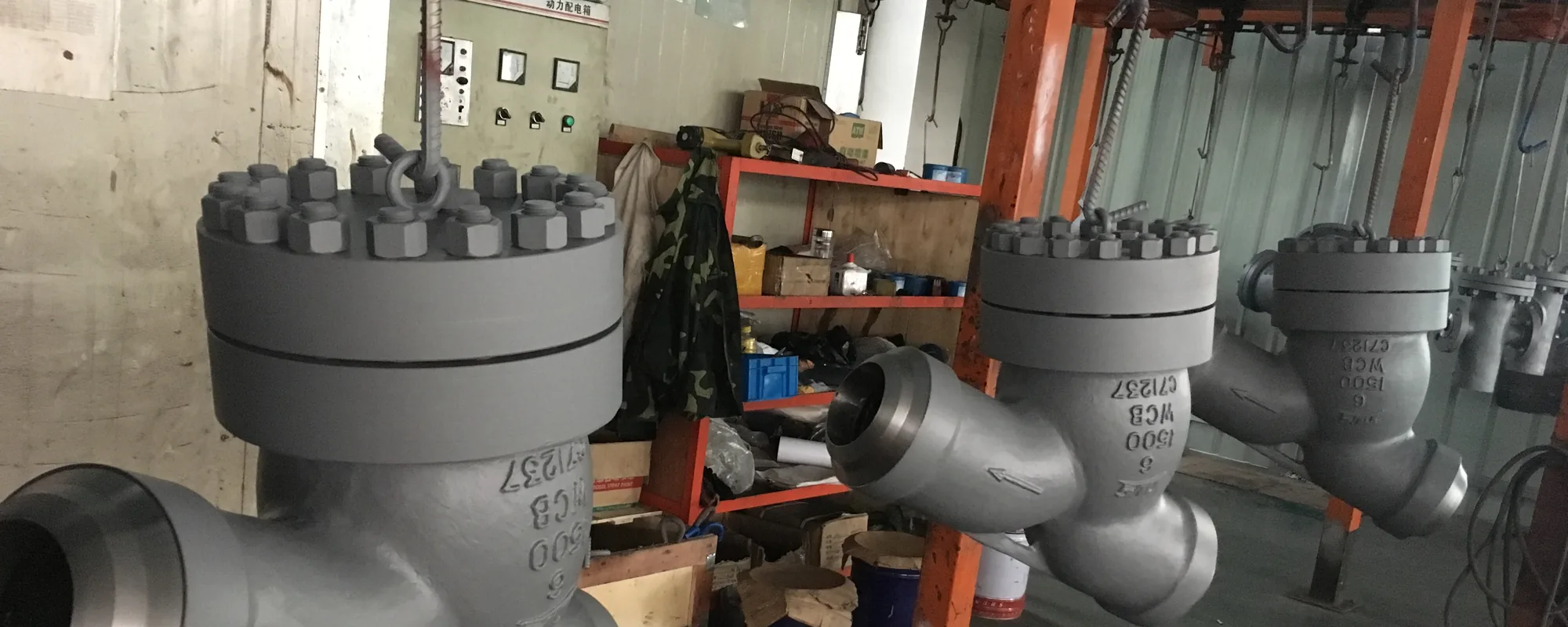
This is the entry point to the whole range: valves whose selection is driven by temperature and pressure rather than by line size or convenience. Above roughly Class 600 in steam service the ordinary decisions stop working. Bolt load becomes impractical, gasket creep turns into a maintenance item, and body material moves from carbon steel to chromium-molybdenum and then to the creep-strength grades. The valves collected here are the constructions that answer those conditions: pressure seal bonnets, integral forged and cast bodies, hardfaced seats and creep-grade materials, in gate, globe, check and stop-check form.
Each valve below is published once, in the category that describes how it is built. A valve is not listed twice under different names.
gate · bolted + pressure seal
globe · bolted + pressure seal
check · bolted + pressure seal
Body, ends and standards are configured per order. The body and trim grades, the end connection (BW, SW, RF or RTJ) and the design, testing and marking standards are largely common across this range and are selected against your duty and specification. Each product page states what applies to that valve.
Not the label. Three things change together as conditions rise, and a valve has to answer all three. The body-bonnet joint has to hold without depending on bolt preload that thermal cycling will relax, which is what pressure seal construction provides. The pressure boundary material has to retain strength at temperature, which moves the selection from A105 through F22 and WC9 into F91, C12A and F92. The seating surfaces have to survive high-velocity steam and repeated closure, which is what cobalt-based hardfacing provides. A valve that answers only one of the three will fail at whichever of the other two was ignored.
Line pressure drives the bonnet into a tapered seal ring, so the joint tightens as pressure rises instead of relying on bolt load that relaxes with every thermal cycle.
F22 and WC9 for high-temperature steam, F91 and C12A for supercritical, F92 for ultra-supercritical. The grade is selected against the ASME B16.34 rating at your design temperature, not offered as a single maximum.
Stellite 6 overlay on seat and disc contact faces, applied and then machined, for erosion and galling resistance in high-velocity steam.
Bevel prepared to ASME B16.25 and matched to the pipe schedule, which removes the flanged joint as a leak path in high-temperature service.
Flexible graphite with anti-extrusion rings, live-loaded where the specification calls for it, for stem sealing at temperature.
A first cut at gate, globe, check or stop-check. The values are catalogue ranges, not a commitment for a specific item.
| Product type | Body | Class | Temperature | Typical service |
|---|---|---|---|---|
| Pressure Seal Gate Valve | Cast or forged | 600 - 4500 | to about 650 °C | Main steam isolation |
| Pressure Seal Globe Valve | Forged | 900 - 4500 | to about 650 °C | Steam isolation and throttling |
| Pressure Seal Check Valve | Cast or forged | 600 - 4500 | to about 650 °C | Main feedwater |
| Y-Globe Stop Check Valve | Forged | 900 - 2500 | to about 620 °C | Boiler and steam systems |
The grade is selected against the rating at your design temperature. The full matrix, with the reason each grade exists, is on the material matrix page.
| Material | Typical service | What decides whether it is right |
|---|---|---|
| A105 / F36 | General high-pressure steam and water | Forged carbon steel. Cheap and well understood, but it loses allowable stress quickly with temperature, so it has to be checked against the rating table rather than assumed. |
| F22 / WC9 | High-temperature steam | Chromium-molybdenum. The workhorse above the carbon steel limit, with useful creep strength and straightforward welding compared with the martensitic grades. |
| F91 / C12A | Supercritical steam | Modified 9Cr-1Mo. Much higher creep strength, but only if the heat treatment window was held. The furnace and PWHT charts are the evidence that it will perform, not the grade name. |
| F92 | Ultra-supercritical steam | Higher creep strength again at the top temperature and class combinations, with a narrower processing window than F91 and correspondingly less tolerance for error in heat treatment. |
| WB36 | High-pressure feedwater | High-strength low-alloy steel used where feedwater pressure rather than temperature governs, allowing a thinner wall than a carbon steel equivalent at the same class. |
| F347 | High-temperature corrosive media | Stabilised austenitic stainless. Selected for corrosion resistance and for stability against sensitisation, not primarily for creep strength. |
Listed only where the standard actually governs something on these valves. What each one covers on a specific item is stated on that item's page.
Catalogue, datasheets, material guide, pressure-temperature rating tables and the RFQ datasheet are collected in resources. Files carry a version date and use searchable text rather than scanned images.
No, and a supplier who publishes one is misleading you. The allowable pressure at a given temperature comes from the ASME B16.34 table for the specific material group and class. A Class 2500 valve in F22 and a Class 2500 valve in F92 have different ratings at 600 °C. Every product page here gives the rating basis rather than a single headline figure.
Forged bodies have no casting porosity and generally give better through-thickness properties, which matters most in thermal fatigue service and at the highest classes. Cast bodies allow shapes that would be uneconomic to forge and are entirely appropriate in many duties. If your specification is silent, tell us the duty and we will state which route we propose and why.
This one is defined by the duty. The pressure seal category is defined by the body-bonnet construction, and only collects valves that actually use a self-energising bonnet joint. Many valves appear in both.
Send a valve list and we answer line by line, including the lines where we would need a deviation and the lines where we think the wrong valve has been specified.