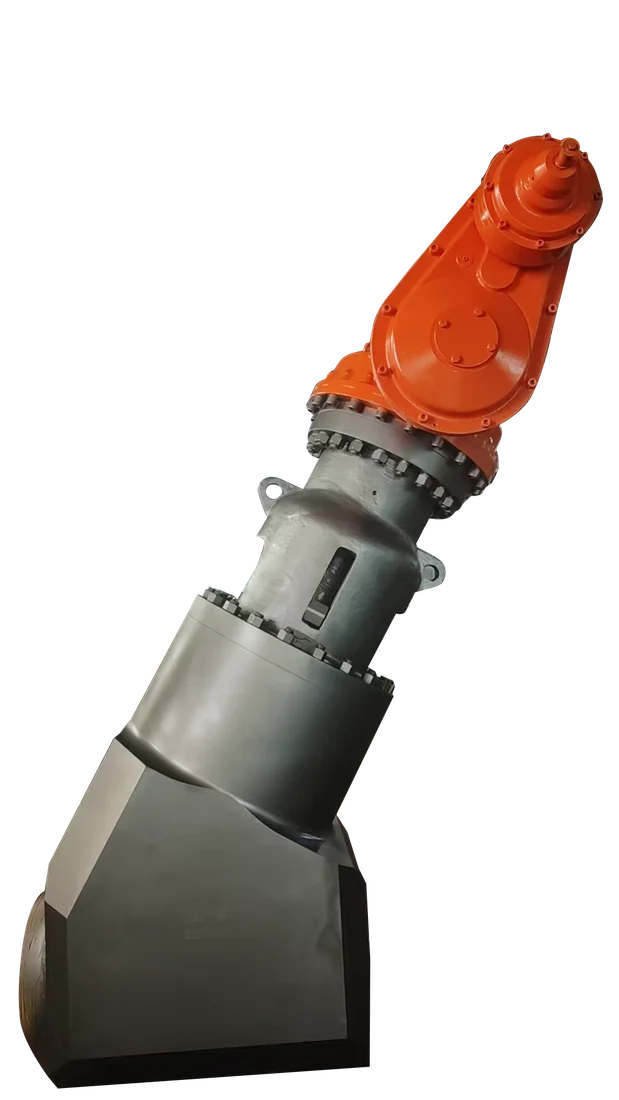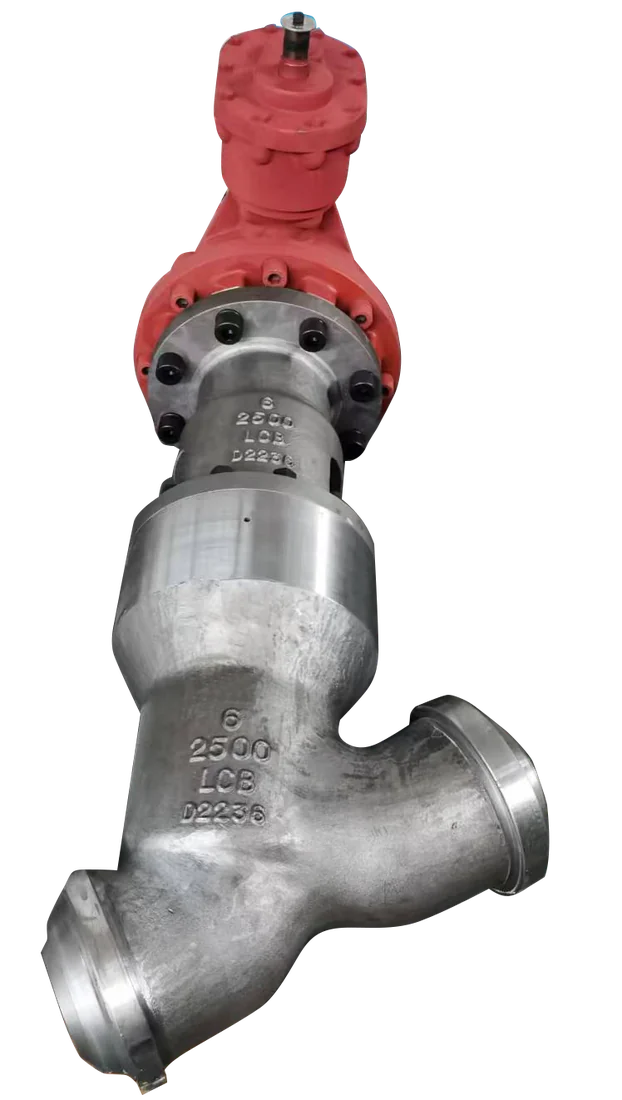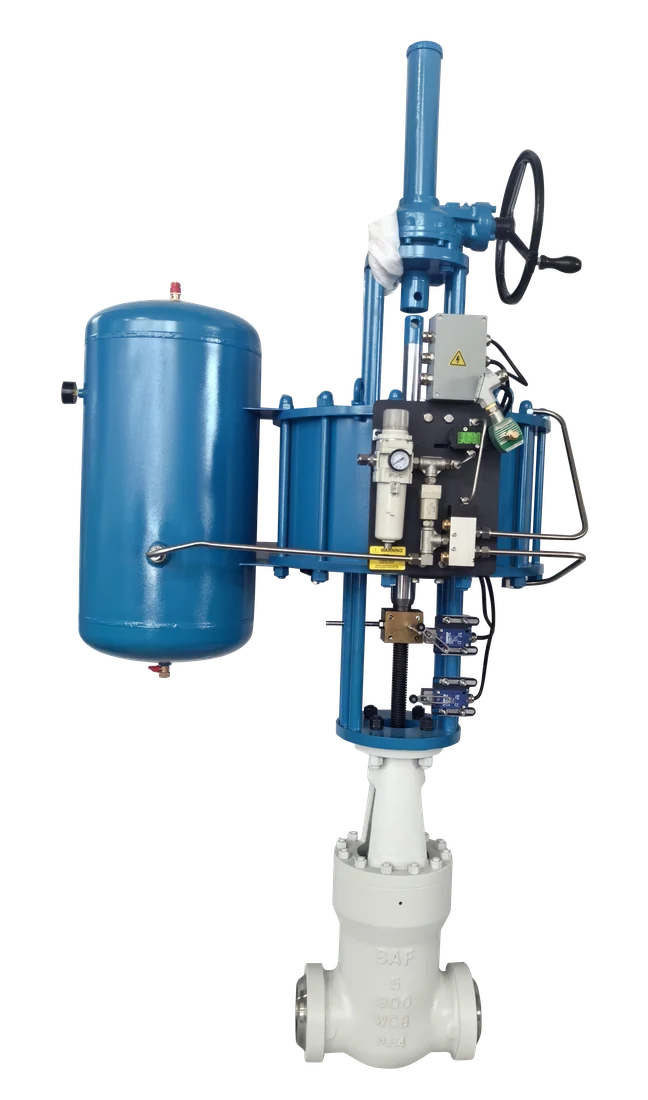
Pressure Seal Gate Valve
gate · pressure seal bonnet
- Size
- NPS 2-24 (DN 50-600)
- Class
- Class 600 - 4500
- Temp
- up to 650 °C / 1200 °F
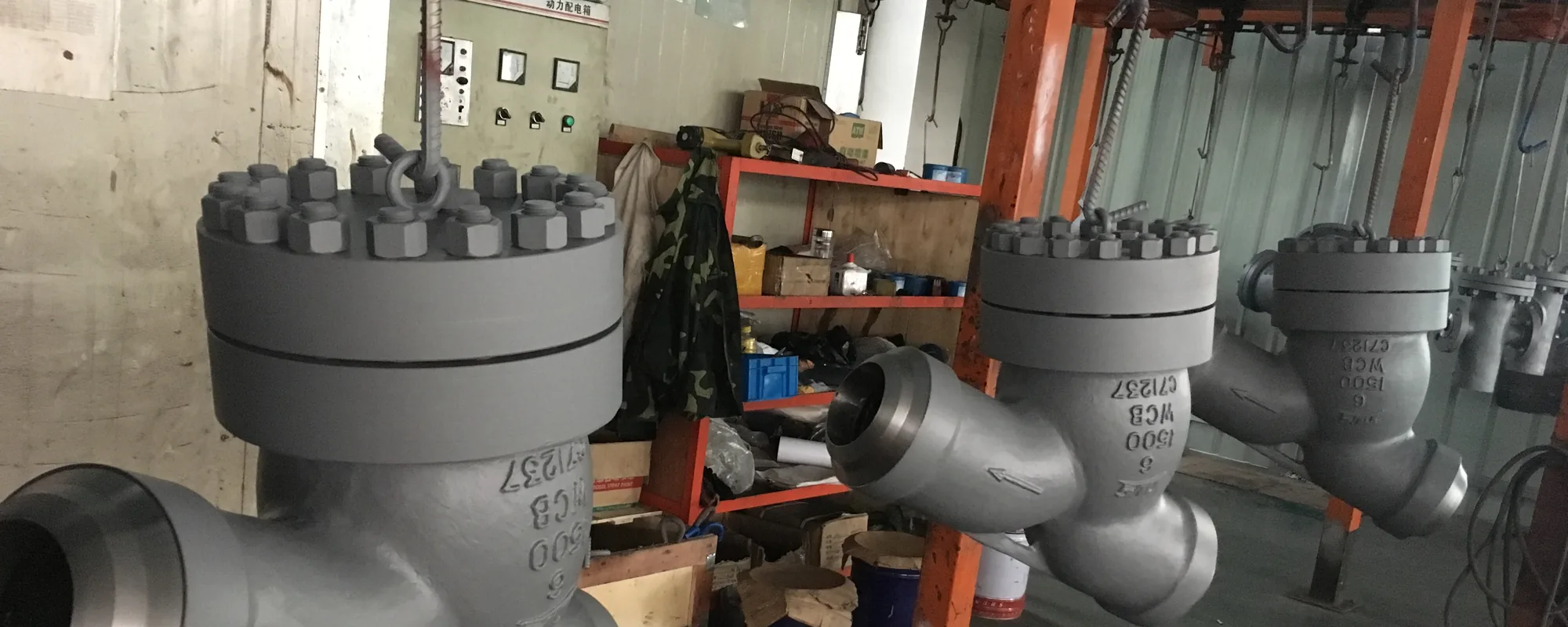
CHP plants run at lower steam conditions than utility units but change load far more often. Cycling, not peak temperature, is the design driver.
| Parameter | Value | Basis |
|---|---|---|
| Live steam pressure | 4-14 MPa typical | typical |
| Live steam temperature | 440-540 °C typical | typical |
| Extraction pressure | 0.3-2.5 MPa to the heat network | typical |
| Load changes | Daily and seasonal, following heat demand | per project |
A district heating CHP plant follows heat demand, which means daily starts in the shoulder seasons and continuous load-following in winter. The steam conditions are modest - F11 or F22 usually covers the body material - but the valves see many times the cycle count of a base-load utility unit.
The interface between the turbine and the heat network is where the valve work concentrates: extraction control, back-pressure isolation, and non-return protection so a network upset cannot feed back into the machine.
Even at Class 900, a bolted bonnet on a valve that thermally cycles daily will need gasket attention. The self-energizing bonnet removes that maintenance item. This is a stronger argument in CHP than in base-load service, where cycles are fewer.
Biomass and waste-to-energy plants add corrosive flue-gas-side chemistry and often more aggressive steam-side conditions than the nominal parameters suggest. Where the fuel is variable, say so at enquiry - it changes the material discussion.
Indicative only. The grade is set by the piping class and the ASME B16.34 rating at your design temperature - see the material matrix.
gate · pressure seal bonnet
globe · pressure seal bonnet
stop check · pressure seal bonnet
Usually not - live steam at 440-540 °C is well within F11 and F22 territory. The exception is a high-parameter industrial CHP running near 540 °C continuously, where the margin should be checked against the actual B16.34 rating rather than assumed.
In our experience, bonnet gasket joints on bolted-bonnet valves, and wedges that bind after a hot shutdown. Both are addressed by construction choices - pressure seal bonnets and flexible wedges - rather than by material upgrades.
Send the system conditions and we will come back with what we would supply, the rating basis, and any point where we would question the specification.