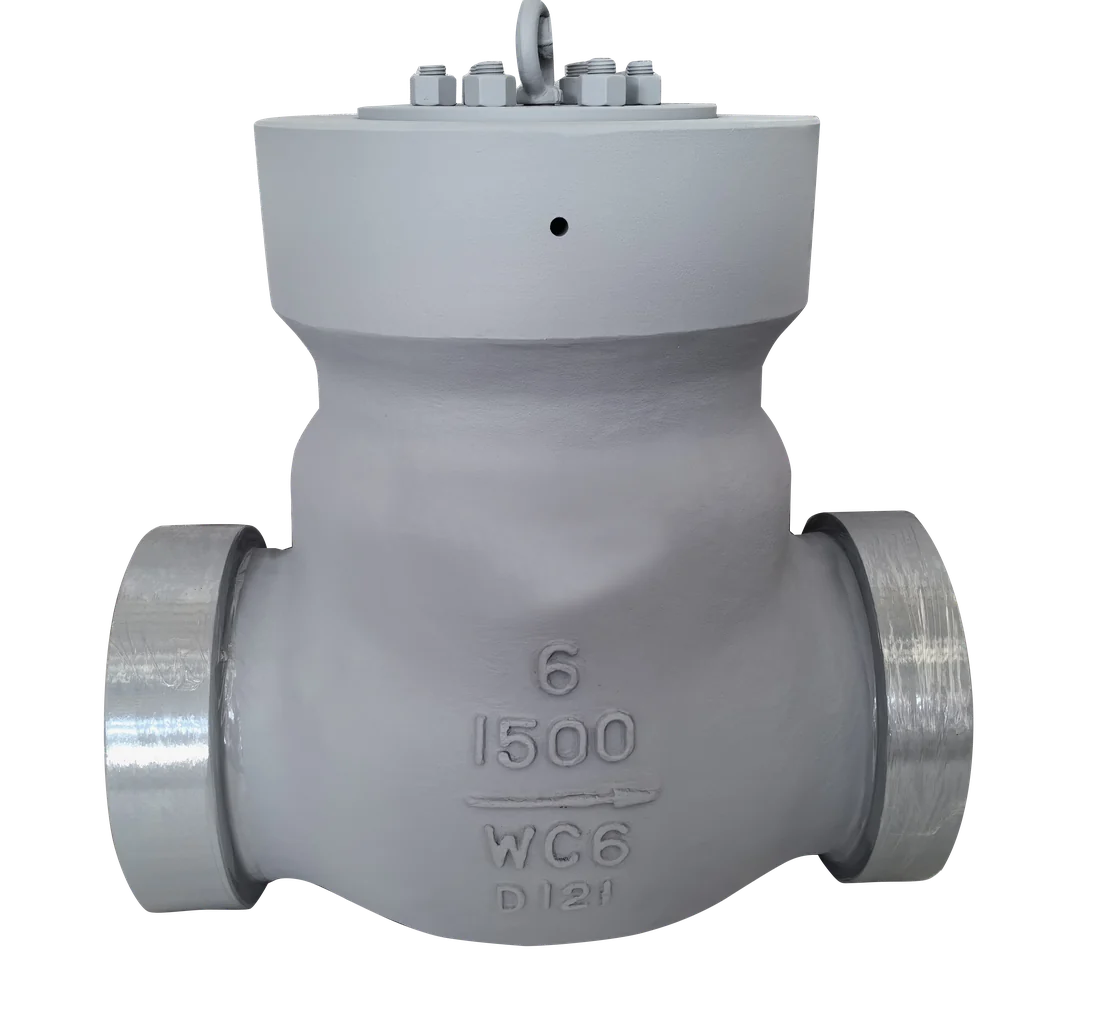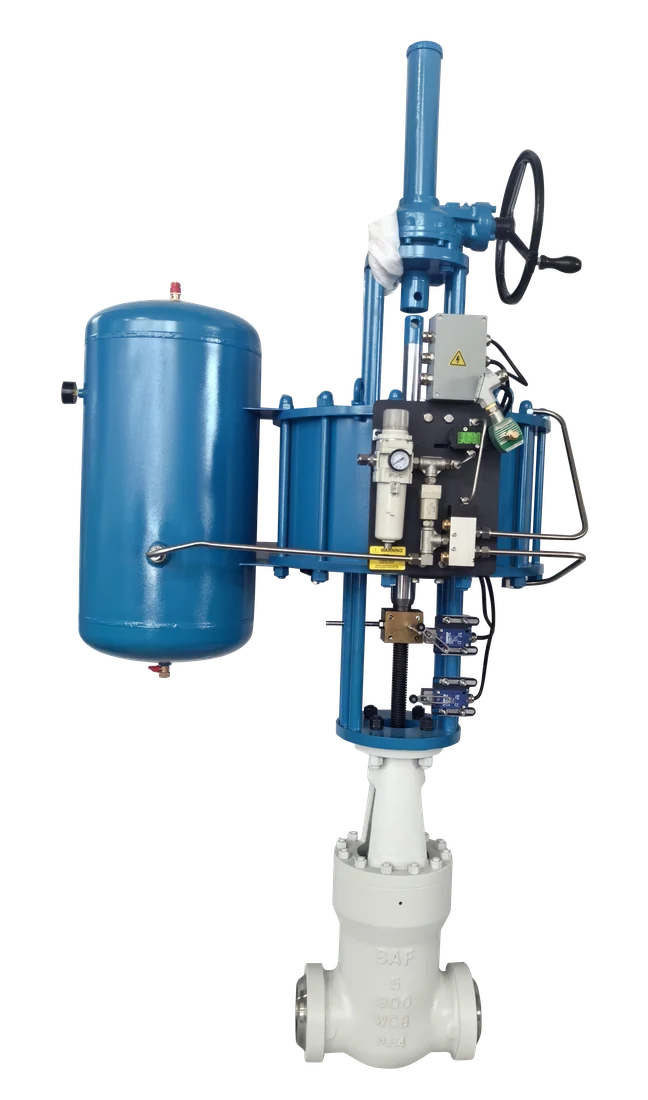
Pressure Seal Gate Valve
gate · pressure seal bonnet
- Size
- NPS 2-24 (DN 50-600)
- Class
- Class 600 - 4500
- Temp
- up to 650 °C / 1200 °F
Secondary-side steam and feedwater duties in a nuclear plant look like a large conventional unit, with one difference that governs everything: what has to be qualified, and to whose satisfaction.
| Parameter | Value | Basis |
|---|---|---|
| Main steam pressure | 6 - 8 MPa, saturated | typical |
| Main steam temperature | 280 - 300 °C | typical |
| Feedwater pressure | Above steam generator pressure plus pump head | typical |
| Feedwater temperature | 180 - 230 °C | typical |
| Wet steam | Moisture carryover is normal, not a fault condition | typical |
| Qualification scope | Defined per project, not by product category | per project |
A pressurised water reactor secondary side runs saturated steam around 280 to 300 °C, well below the creep range that drives material selection on an ultra-supercritical fossil unit. Carbon and low-alloy steels are usually adequate for the pressure boundary. What changes is the wetness of the steam, which makes erosion the dominant wear mechanism rather than creep, and the documentation regime, which is stricter than anything on the fossil side.
The main steam isolation valve has one job that dominates its design: close within the time the safety analysis assumes, against full flow, every time it is asked. That requirement drives the actuator, the closure member geometry and the testing regime far more than the pressure rating does. Where we supply into this position, the closure time requirement and the means of demonstrating it are agreed in writing before manufacture.
Similar logic on the feedwater side, with the added consideration that the valve sits downstream of the feed pumps and sees pump shut-off head. Check valve dynamics on a pump trip are part of the system study rather than a property of the valve alone.
Nuclear valve supply spans a wide range, from conventional-island balance-of-plant items procured on ordinary commercial terms through to safety-class equipment requiring a specific quality programme and third-party oversight. These are not the same undertaking and no supplier can claim the whole span generically. Tell us the class and the applicable programme for your position, and we will state plainly what we can supply against it and what we cannot.
Indicative only. The grade is set by the piping class and the ASME B16.34 rating at your design temperature - see the material matrix.
gate · pressure seal bonnet
check · pressure seal bonnet
That depends entirely on the class and the quality programme your project applies, and it is confirmed per enquiry rather than claimed on a web page. Safety-class supply requires a specific quality programme, documented qualification and usually third-party oversight. Send us the position, the class and the programme and we will answer directly, including where the answer is no.
Because saturated secondary steam around 300 °C sits well below the creep range. The temperature-driven move to F91 and F92 is not needed. The trade is that wet steam makes flow-accelerated corrosion and erosion the governing mechanisms instead, which changes where you spend the money.
At minimum the same package as a fossil unit: material certificates against heat numbers, PMI, NDE, heat treatment records, pressure test reports and the dimensional record, all against an agreed ITP. Nuclear projects normally add programme-specific requirements on top, which are agreed before order rather than negotiated at inspection.
Send the system conditions and we will come back with what we would supply, the rating basis, and any point where we would question the specification.