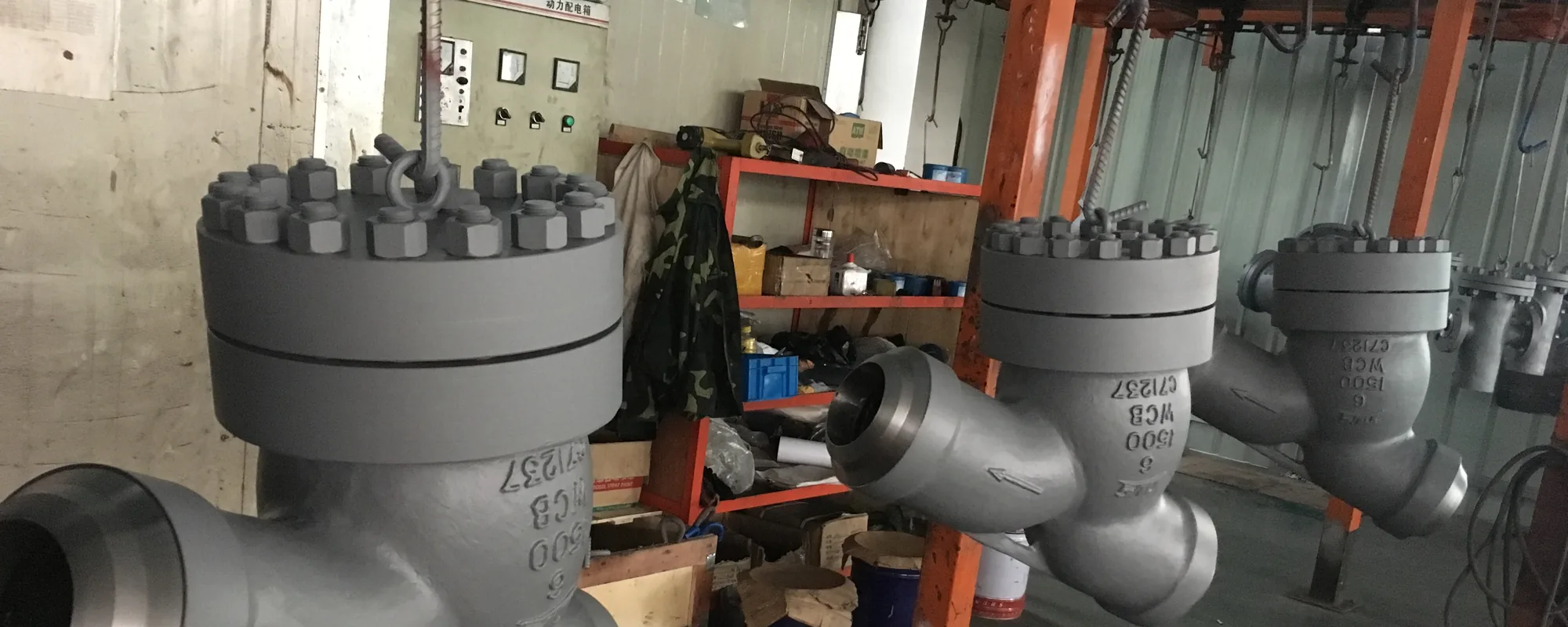
“Stellite 6 hardfaced” appears on essentially every power plant valve datasheet. It is a real and useful specification, and it is also one where the alloy name alone tells you very little about what you are getting.
Why cobalt-based alloys
The seating surfaces of a steam valve have to survive metal-to-metal contact at temperature, repeatedly, without galling. Stainless and 13Cr surfaces in contact at 500 °C will gall - they cold-weld at contact points and tear on the next movement.
Cobalt-chromium-tungsten alloys resist this. Stellite 6 (nominally Co-28Cr-4.5W-1.2C) is the common choice for valve seating because it combines galling resistance, hardness retention at temperature, and adequate resistance to the erosion that comes with wet steam.
It is not the hardest option, and it is not the most erosion-resistant. It is the one that behaves well across the whole set of demands a valve seat faces.
How it is applied
Three routes are common:
PTA (plasma transferred arc). Powder feed, plasma arc, high control over deposition rate and dilution. Consistent, well suited to production quantities, and the usual choice for seat rings.
Manual GTAW. Rod feed with a TIG torch. More operator-dependent, more dilution variability, but flexible for repair work and awkward geometries.
Oxy-acetylene. Older method, low dilution, largely superseded for production work.
The route matters because of dilution - the extent to which the base metal mixes into the deposit. A deposit with too much dilution has base metal iron in it, and its hardness and galling resistance are reduced. This is the most common way a valve arrives with a compliant certificate and a substandard surface.
What to specify beyond the alloy name
The alloy is the start. What actually determines performance:
Finished overlay thickness. After machining and lapping, not as-deposited. A specification saying “Stellite 6 overlay” with no thickness allows a deposit that is mostly machined away. Typical requirements are in the range of 1.5-3 mm finished, depending on the valve and the expected refurbishment cycles - the deeper the overlay, the more times the seat can be re-lapped before it needs re-facing.
Hardness range on the finished surface. Stellite 6 in the low 40s HRC is normal. Significantly lower usually means dilution.
Dilution limit or a chemistry check on the finished surface. The direct way to control the problem, and the one most specifications omit.
Number of layers. A single-layer deposit on a steel substrate is always diluted. Two layers, with the second deposited onto the first, gives a working surface that is essentially undiluted alloy.
NDE of the overlay. PT on the finished surface to detect cracking. Cobalt alloys can crack during deposition if preheat and interpass temperatures are not controlled.
Preheat, interpass and PWHT. On alloy and creep-grade bodies, the overlay welding is welding on the pressure boundary and needs the same procedural control as any other weld - including PWHT for F91 and F92.
What hardfacing protects against
- Galling between the seat and closure member. This is the primary job and it does it well.
- Wear from repeated seating over many cycles.
- Moderate erosion from wet steam and flashing.
What it does not protect against
This is the part usually left out.
- Sustained throttling. A valve held partly open in flashing steam will wire-draw the seat regardless of the overlay. The overlay slows the process. It does not prevent it, and it does not make an isolation valve into a control valve.
- Continuously abrasive streams. Ash, char or slag-bearing service erodes Stellite. Tungsten carbide overlays or a different valve type are the answer there.
- Corrosion. Stellite 6 is chosen for mechanical properties, not chemical resistance. If the medium is corrosive, that is a separate material question.
- Thermal distortion. The overlay does not stop the body flexing. A flexible wedge does.
The cobalt question
Cobalt-based hardfacing becomes activated in a neutron flux, which is why nuclear applications sometimes require cobalt-free alternatives - nickel-based alloys such as the Colmonoy family, or iron-based options. These generally have lower galling resistance and are chosen for the activation constraint rather than performance.
For conventional plant and conventional island service, cobalt-based hardfacing remains the standard and there is no reason to avoid it.
How to check what you got
Ask for:
- The welding procedure for the overlay, qualified per ASME Section IX
- Deposition method (PTA or GTAW), stated per item
- Number of layers
- Hardness test results on the finished surface, with locations
- PT report on the finished overlay
- Finished thickness recorded on the dimensional report
A supplier who reports the hardness on the finished machined surface, rather than on a test coupon, is giving you the number that matters.