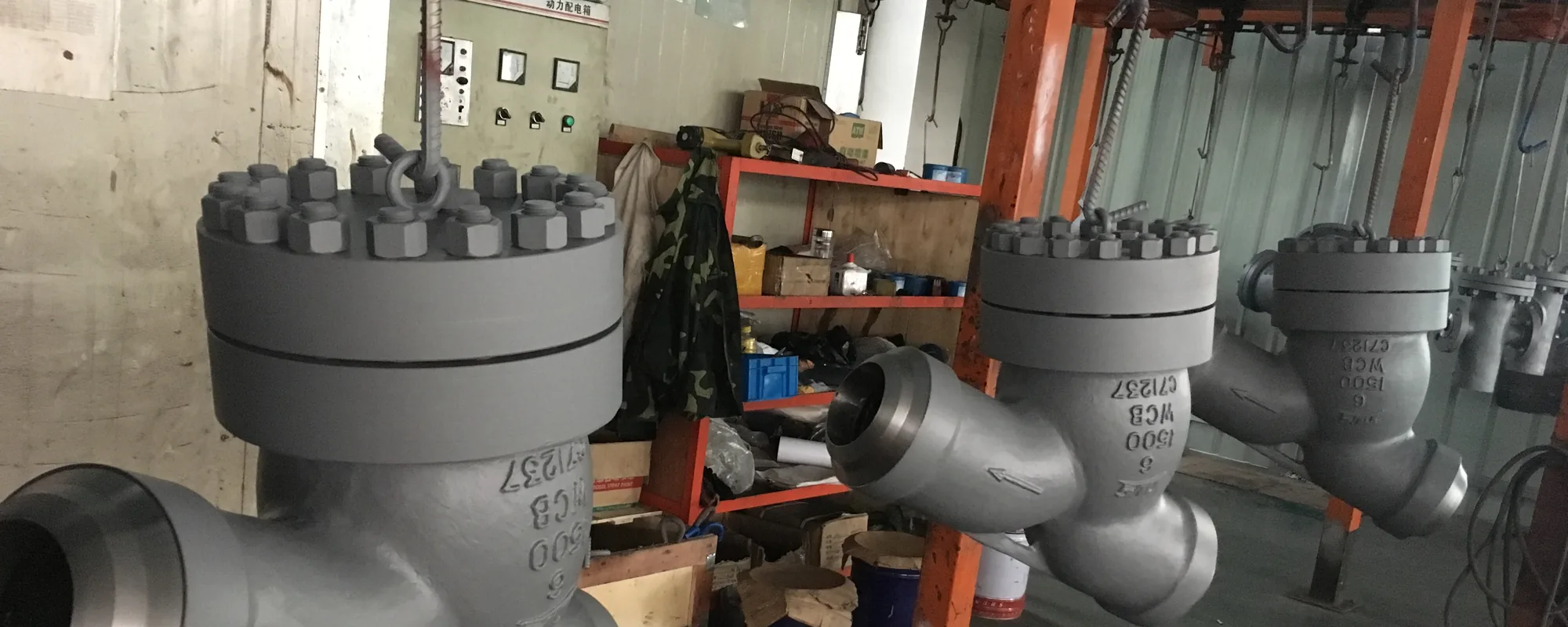
These three appear together on most steel valve datasheets, usually as a list with no indication of what each contributes. They are not alternatives and they do not overlap much. Here is what each one does.
ASME B16.34 - the base
Governs: pressure-temperature ratings, minimum wall thickness, acceptable materials, shell testing and marking.
This is the foundation. It is what makes a “Class 1500 valve” mean something. The rating tables give allowable pressure against temperature for each material group, and the wall thickness tables give the minimum pressure boundary thickness for each class and size.
Practically every steel valve in power or process service is built to B16.34. If a datasheet does not reference it, ask why.
Does not govern: face-to-face dimensions, seat leakage acceptance, trim design, or which valve type suits your service.
API 600 - heavy-duty bolted bonnet gate valves
Governs: bolted bonnet steel gate valves with flanged or butt-welding ends. It adds requirements on top of B16.34 - heavier minimum wall, defined stem diameters, yoke and operator requirements, back seat and packing chamber design, and standardised trim numbers.
Does not govern: globe valves, check valves, compact valves NPS 4 and below, or - and this is the important one - pressure seal bonnet valves.
API 600 is written for bolted bonnets. It says so. Yet it appears on a great many pressure seal gate valve datasheets, including on well-known supplier sites, as though it were a general quality mark for gate valves.
If you see API 600 listed against a pressure seal valve, the reasonable question is: which clauses are you claiming compliance with? Some - trim numbers, stem sizing - can be applied by analogy. The bonnet requirements cannot, because the valve does not have that kind of bonnet.
This matters beyond pedantry. A specification that says “gate valves shall be to API 600” and a supply of pressure seal valves creates a compliance gap that surfaces at third-party inspection, not at quotation.
API 602 - compact valves
Governs: gate, globe and check valves NPS 4 / DN 100 and smaller. Wall thickness basis appropriate to small bore, socket weld and threaded end options, and the standard/extended/full bore designations.
Does not govern: anything above NPS 4.
The bore designation is the part buyers most often miss. A standard-bore API 602 valve has a through-bore smaller than the connecting pipe. On a drain or sampling line where that matters, full bore has to be specified - it is not the default.
How they stack
For a typical power plant valve list:
| Valve | Base rating | Additional design standard | Testing |
|---|---|---|---|
| NPS 12 Class 1500 pressure seal gate | ASME B16.34 | Manufacturer standard (not API 600) | API 598 |
| NPS 12 Class 600 bolted bonnet gate | ASME B16.34 | API 600 | API 598 |
| NPS 1 Class 800 forged globe | ASME B16.34 | API 602 | API 598 |
| NPS 8 Class 900 swing check | ASME B16.34 | API 594 if the construction is within its scope | API 598 |
Note what the first row does not say. Above Class 900 in pressure seal construction, there is no API design standard that fits. The design is to B16.34 plus manufacturer standard, and the way to control that is through the project specification and the approved GA drawing - not by naming a standard that does not apply.
The other standards in the list
ASME B16.10 - face-to-face and end-to-end dimensions. Matters for replacements.
ASME B16.25 - butt weld end preparation. Matters because the bevel and bore have to match your actual pipe schedule, not a nominal size.
ASME B16.5 / B16.47 - flanged end dimensions where the valve is flanged.
API 598 / MSS SP-61 - inspection and pressure testing. Pick one and state it; they have different allowable leakage rates.
MSS SP-25 - marking.
API 594 - check valves, but confirm it covers your specific construction rather than assuming it does.
Writing it into a specification
The failure mode is a list of standards with no statement of what each applies to. That looks thorough and controls nothing.
Better is to state, per requirement, which standard governs it:
Design and rating: ASME B16.34, Standard Class. Face-to-face: ASME B16.10 where tabulated; manufacturer standard elsewhere, to be stated on the GA drawing. Butt weld ends: ASME B16.25, prepared for [pipe spec and schedule]. Inspection and testing: API 598. Marking: MSS SP-25. Bolted bonnet gate valves: additionally API 600. Pressure seal valves: manufacturer standard, GA drawing subject to approval.
That last line is the one that saves an argument later.