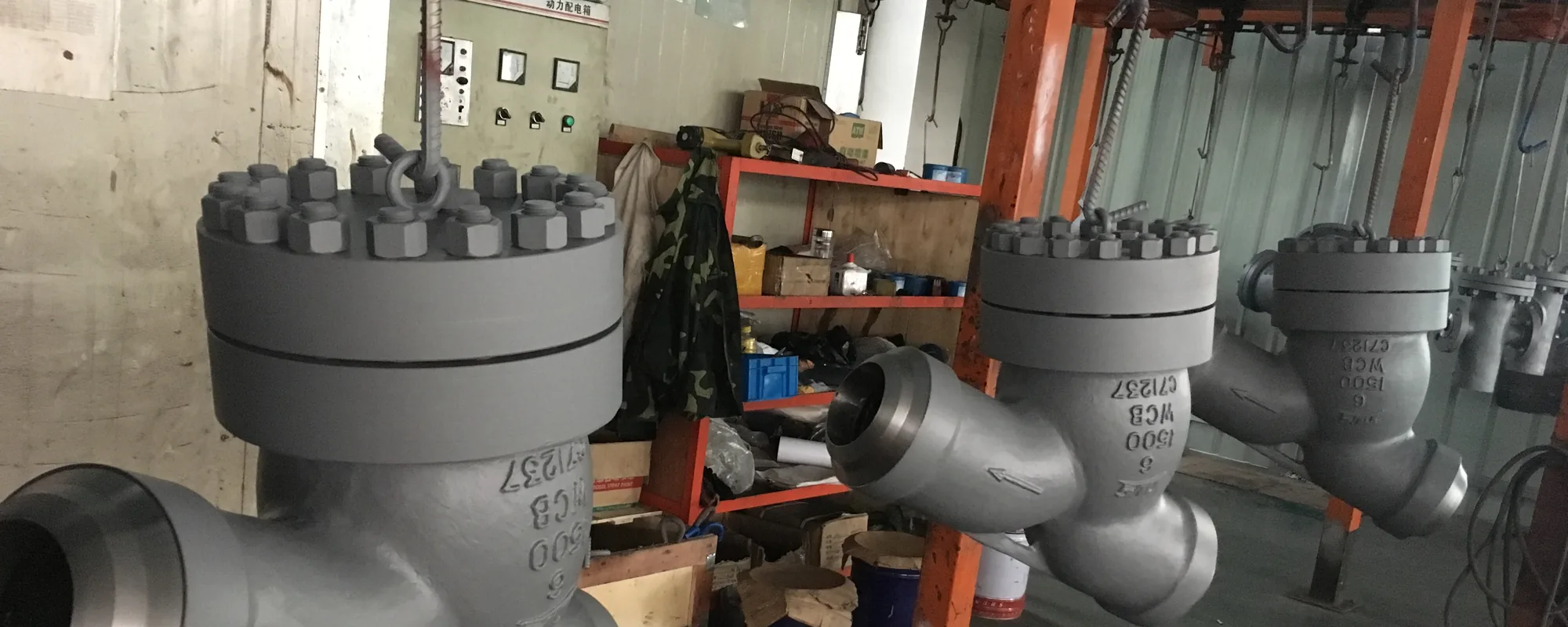
Every stage below produces a record. That is the point of documenting the route this way: an inspector should be able to follow a valve backwards from its nameplate to the heat it was forged from.
What is done in house and what is sourced
Pending verification. This section must state exactly which operations DERVOS VALVE performs in its own facility and which are sourced, with the supporting evidence - facility photographs, equipment lists and, for sourced operations, the supplier approval records. Until that information is confirmed, this page describes the manufacturing route and the records it generates, not a claim about who performs each step.
This is deliberate. A capability claim without evidence behind it is exactly what this site is built to avoid.
The route
1. Forging Billet from a mill-certified heat, forged open-die for large sections or closed-die for repeat small bore. The forging route affects machining allowance, dimensional consistency and lead time, and is stated per item on the datasheet. Record: mill certificate, forging route, heat number.
2. Heat treatment of the forging Normalise and temper, or quench and temper, per the grade. Creep grades - F91, F92 - have narrow tempering windows, and both under- and over-tempering damage the material irreversibly. Record: furnace chart with actual temperatures, hold times and thermocouple positions.
3. Non-destructive examination of the forging Ultrasonic examination before machining, while there is still enough material to reject the part economically. Acceptance criteria per the project specification. Record: UT report.
4. Machining Body, bonnet, seat pockets, end preparations. Heat number transferred at every stage where the original marking would be removed. Record: in-process dimensional checks, heat number transfer record.
5. Hardfacing Stellite 6 overlay on seat and closure member faces, deposited by PTA or manual GTAW, two layers to limit dilution. Preheat and interpass control per the qualified procedure. Record: welding procedure, deposition method, hardness on the finished surface, PT report.
6. Post-weld heat treatment For any welding on the pressure boundary, including overlay on alloy bodies. Cycle per the qualified procedure. Record: PWHT chart per weld, hardness survey afterwards.
7. Final machining and lapping Seat and closure member faces machined and lapped to the required finish. Overlay thickness after machining is recorded, because it determines how many times the seat can be re-lapped in service. Record: finished overlay thickness, surface finish.
8. PMI Positive material identification on every pressure-containing part, verifying the grade independently of the paperwork. This is what catches a mixed part. Record: PMI report per part.
9. Assembly Pressure seal bonnet fitted with a new seal ring, retainer segments, gland and packing. Assembly preload applied to the specified value and sequence. Guide and hinge clearances recorded. Record: assembly preload, clearance measurements.
10. Pressure testing Shell, seat and back seat testing per API 598 or MSS SP-61, whichever the ITP states. Record: test report with actual pressure, actual duration and observation.
11. Dimensional inspection Against the approved GA drawing: face-to-face, end preparation, overall envelope. Record: dimensional report.
12. Preservation, marking and packing End protection, preservation appropriate to the storage period, nameplate and body marking per MSS SP-25. Record: packing list, preservation record.
Why the record matters more than the photograph
A photograph of a machine shop proves that a machine shop exists. It does not prove that your valve was made there, from the heat on the certificate, with the heat treatment on the chart.
The traceable chain - heat number on the mill certificate, carried through machining, verified by PMI, matched on the dimensional report and stamped on the finished body - is what actually proves it. That chain is checkable by an inspector and by you.
Ask for a sample document package. It tells you more about a supplier than a factory tour.