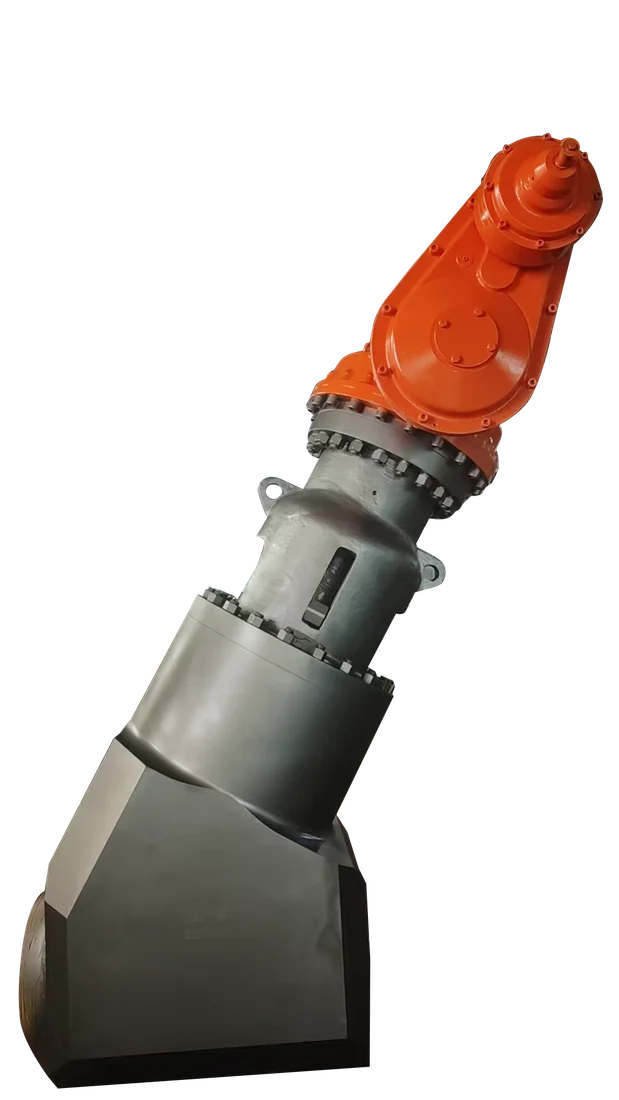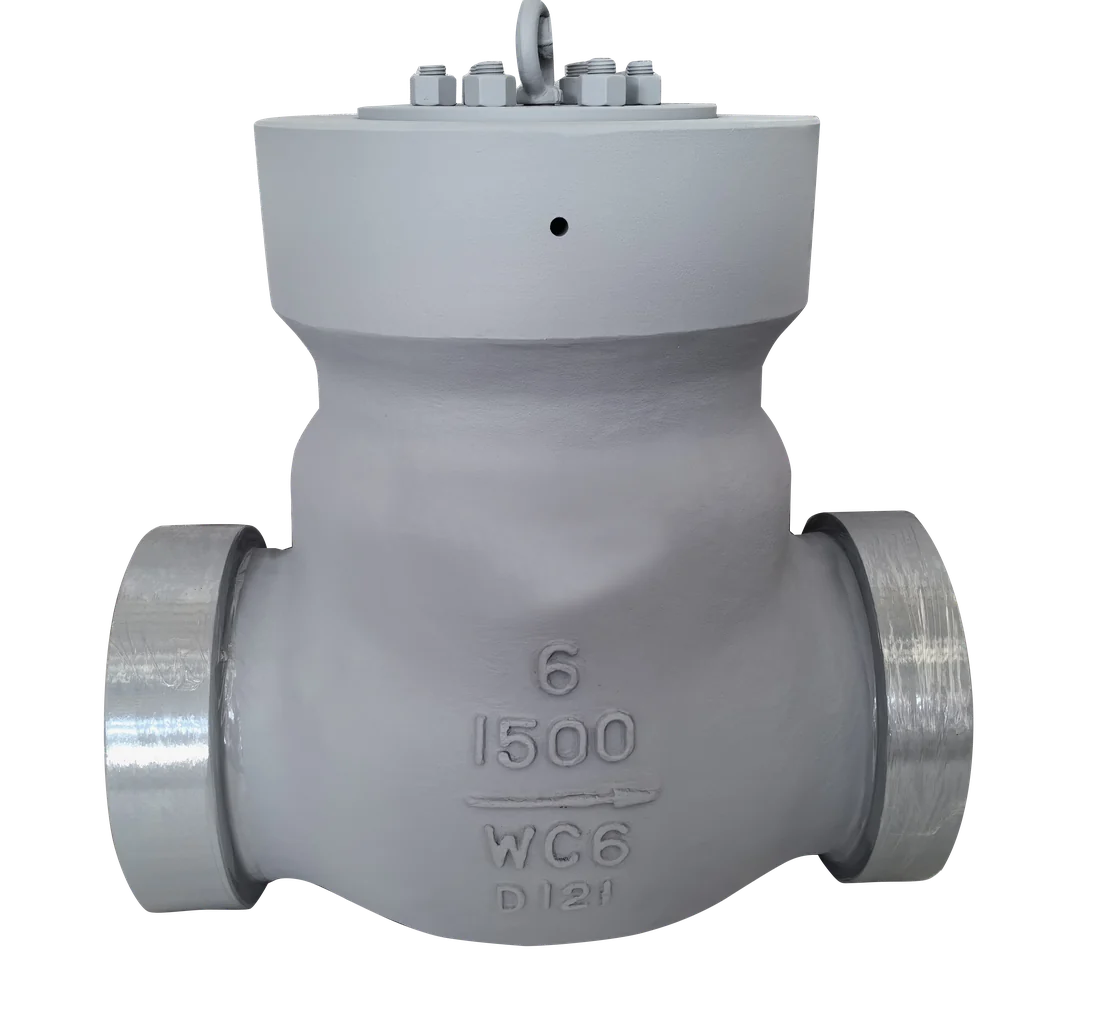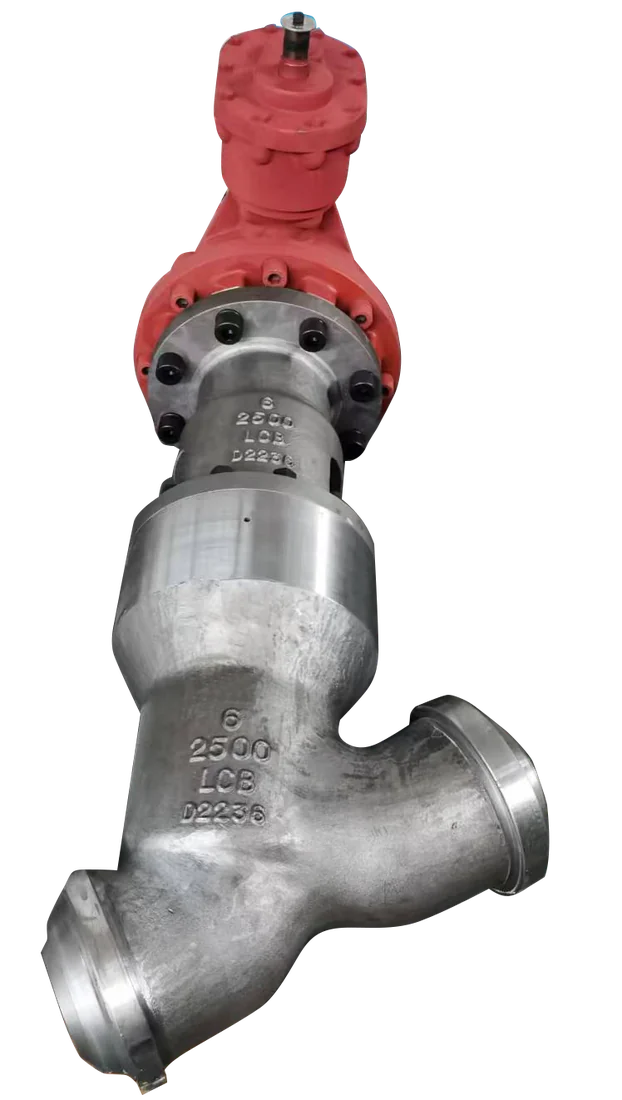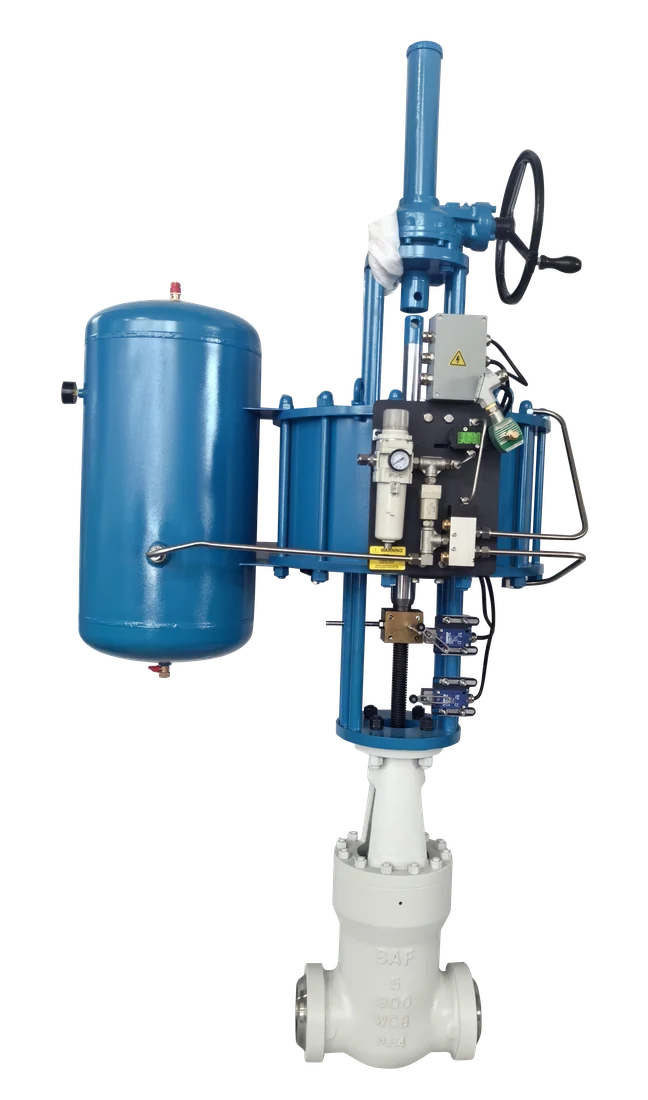
Pressure Seal Gate Valve
gate · pressure seal bonnet
- Size
- NPS 2-24 (DN 50-600)
- Class
- Class 600 - 4500
- Temp
- up to 650 °C / 1200 °F
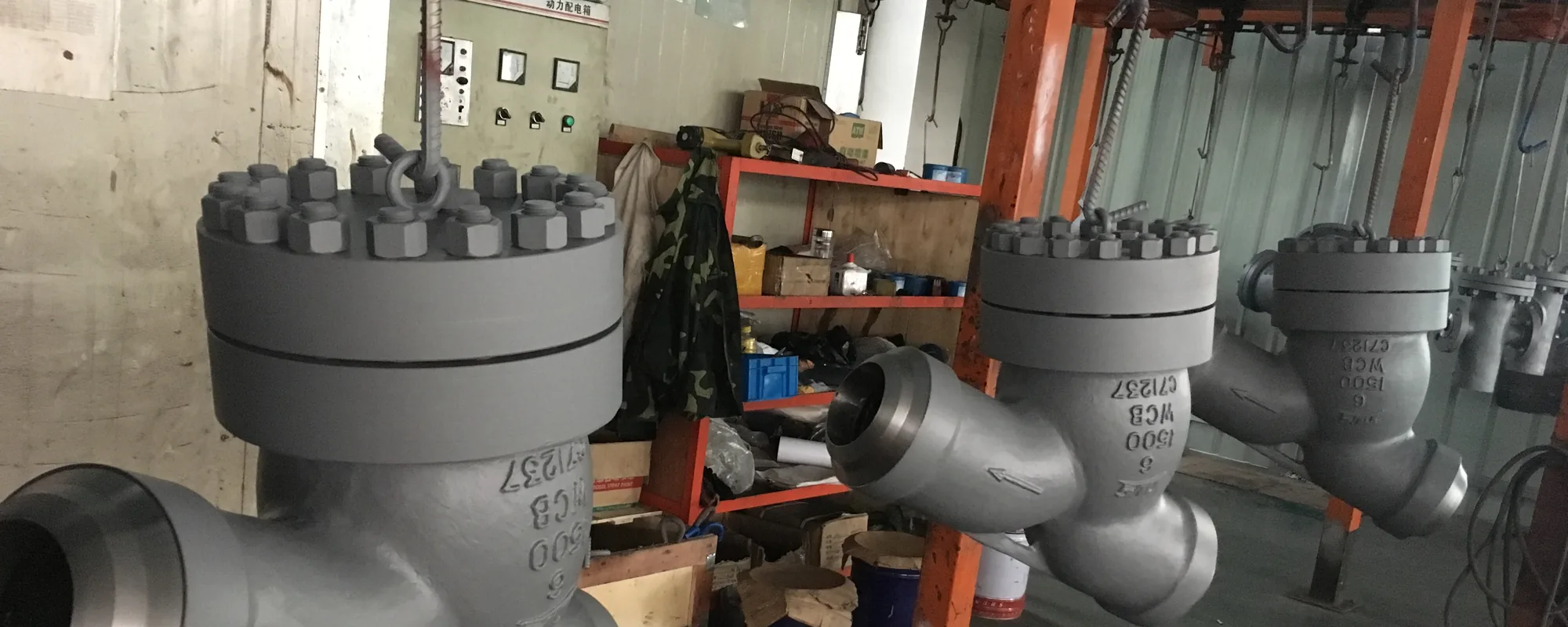
A pressure seal bonnet is a body-bonnet joint that uses line pressure to seal itself. The bonnet is inserted into the body from the inside, a tapered seal ring sits above it, and internal pressure pushes the assembly upward into the taper. The higher the pressure, the harder the joint seals. This is the opposite of how a bolted bonnet behaves, and it is the reason pressure seal construction dominates above roughly Class 900 in power service. Everything collected in this category uses that joint. Nothing else is admitted, because the term is worth nothing if it is applied loosely.
Each valve below is published once, in the category that describes how it is built. A valve is not listed twice under different names.
gate · pressure seal bonnet
globe · pressure seal bonnet
check · pressure seal bonnet
stop check · pressure seal bonnet
Body, ends and standards are configured per order. The body and trim grades, the end connection (BW, SW, RF or RTJ) and the design, testing and marking standards are largely common across this range and are selected against your duty and specification. Each product page states what applies to that valve.
Working from the inside out: the bonnet passes up through the body neck and is lifted into position, a tapered graphite seal ring sits on the bonnet shoulder against a matching taper in the body bore, a thrust ring transmits load evenly into it, and split retainer segments in a groove take the upward load. Sealing force is proportional to line pressure. The consequence people miss is at the other end of the range: at very low pressure there is little force available to energise the seal, so initial tightness comes from assembly preload applied through the gland studs. A valve that weeps cold and seals perfectly hot is almost always an assembly problem, not a ring problem.
Sealing force rises with line pressure. No hot torquing, no re-tightening after the first thermal cycle, no gasket creep to compensate.
Split ring in a machined groove takes the upward load. Disassembly requires driving the bonnet down into the body first, which is the step crews familiar only with bolted bonnets get wrong.
Flexible graphite with a stainless or Inconel liner. Treated as a one-time part: a reused ring has taken a set and is a common cause of a valve that leaks after overhaul.
No large bonnet flange, so the valve is lighter and shorter in the neck than an equivalent bolted design at the same class, which matters for pipe support loading.
Allows the packing to be repacked under pressure where the specification and the operating procedure permit it.
A first cut at gate, globe, check or stop-check. The values are catalogue ranges, not a commitment for a specific item.
| Product type | Body | Class | Temperature | Typical service |
|---|---|---|---|---|
| Pressure Seal Gate Valve | Cast or forged | 900 - 4500 | to about 650 °C | Full-bore isolation, main steam and feedwater |
| Pressure Seal Globe Valve | Forged | 900 - 4500 | to about 650 °C | Tight shut-off, drains and vents |
| Pressure Seal Swing Check Valve | Cast or forged | 900 - 2500 | to about 650 °C | Low-loss non-return, feedwater and steam |
| Pressure Seal Lift Check Valve | Forged | 900 - 2500 | to about 650 °C | Fast closure where reverse-flow stability matters |
| Y-Globe Stop Check Valve | Forged | 900 - 2500 | to about 620 °C | Boiler outlet, isolation plus non-return |
The grade is selected against the rating at your design temperature. The full matrix, with the reason each grade exists, is on the material matrix page.
| Material | Typical service | What decides whether it is right |
|---|---|---|
| A105 / F36 | General high-pressure steam and water | Forged carbon steel. Cheap and well understood, but it loses allowable stress quickly with temperature, so it has to be checked against the rating table rather than assumed. |
| F22 / WC9 | High-temperature steam | Chromium-molybdenum. The workhorse above the carbon steel limit, with useful creep strength and straightforward welding compared with the martensitic grades. |
| F91 / C12A | Supercritical steam | Modified 9Cr-1Mo. Much higher creep strength, but only if the heat treatment window was held. The furnace and PWHT charts are the evidence that it will perform, not the grade name. |
| F92 | Ultra-supercritical steam | Higher creep strength again at the top temperature and class combinations, with a narrower processing window than F91 and correspondingly less tolerance for error in heat treatment. |
| WB36 | High-pressure feedwater | High-strength low-alloy steel used where feedwater pressure rather than temperature governs, allowing a thinner wall than a carbon steel equivalent at the same class. |
| F347 | High-temperature corrosive media | Stabilised austenitic stainless. Selected for corrosion resistance and for stability against sensitisation, not primarily for creep strength. |
Listed only where the standard actually governs something on these valves. What each one covers on a specific item is stated on that item's page.
Catalogue, datasheets, material guide, pressure-temperature rating tables and the RFQ datasheet are collected in resources. Files carry a version date and use searchable text rather than scanned images.
The body-bonnet joint should not. The gland does: packing consolidates during the first thermal cycles and the gland nuts are adjusted as part of commissioning. If the body-bonnet joint itself weeps in service, the cause is normally the seal ring, the taper surface or the assembly preload, not a torque figure that can be corrected by tightening something.
No, and this is the most common damage mechanism at overhaul. The bonnet is larger than the bore it passes through when seated. It has to be driven down into the body to free the retainer segments, then the segments removed, then the bonnet withdrawn. Crews used to bolted bonnets try to lift it and damage the seal ring or the retainer groove.
It can be built, but it is usually the wrong answer. Below Class 900 a bolted bonnet is simpler to maintain and the pressure available to energise the seal is lower. We will say so rather than sell the more expensive construction.
Send a valve list and we answer line by line, including the lines where we would need a deviation and the lines where we think the wrong valve has been specified.