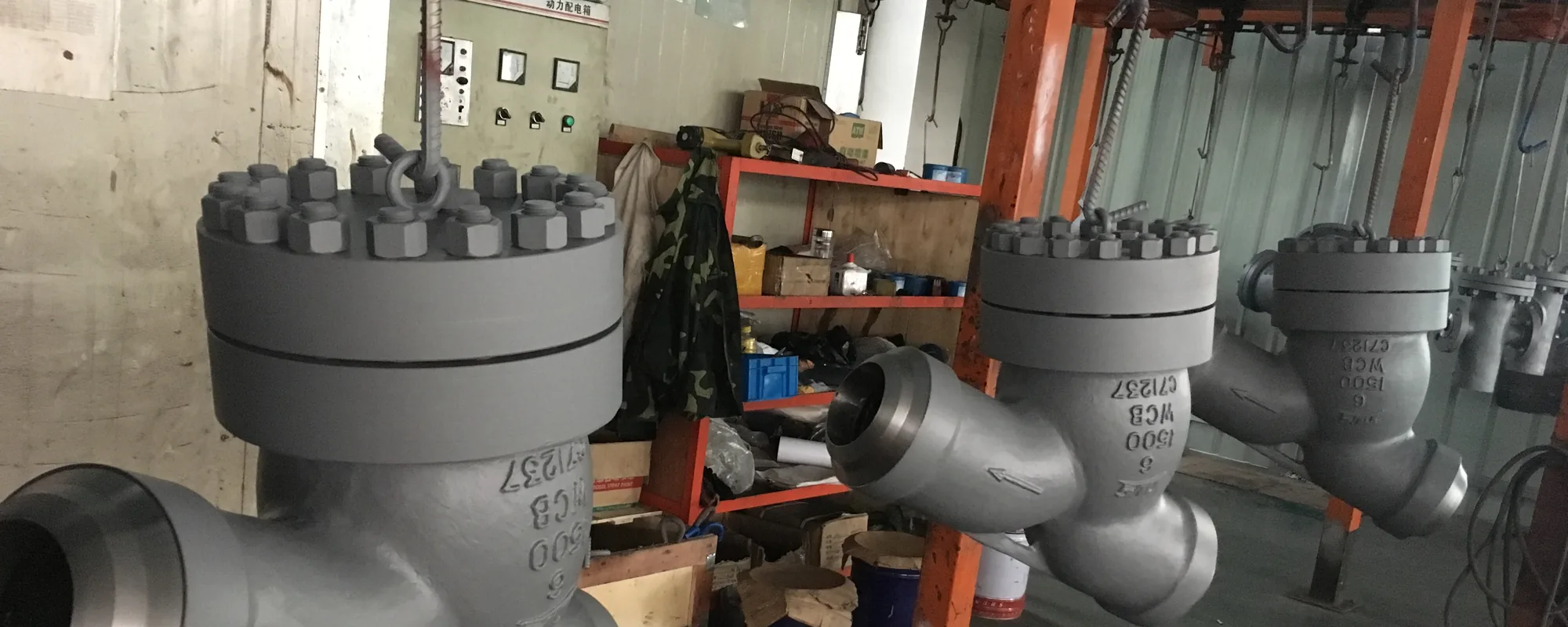
A valve for a project frequently arrives on site twelve to eighteen months before it is installed, and spends that time in a laydown area. Packing designed only to survive the voyage is not enough.
Preservation
Machined surfaces - end preparations, flange faces, exposed stem - coated with a removable preservative appropriate to the storage period and the climate. The coating type and the protection period it provides should be stated on the preservation record, because a three-month preservative on a valve stored for eighteen months is a corrosion problem waiting to be found at installation.
Internal surfaces - the body cavity is drained after testing and dried. Residual test water in a valve stored for a year causes pitting on seating surfaces, which is exactly where you cannot afford it. Desiccant inside the body, where the design allows.
Valve position for storage - normally slightly open so the seating surfaces are not in contact under load for the storage period, unless the specific design requires otherwise. This should be stated, not assumed.
End protection
Butt weld ends - the bevel is a machined surface that will be welded. It has to arrive undamaged. Plastic or steel end caps, fitted so they cannot work loose in transit, with the bevel itself protected against knocks. A damaged bevel means machining at site, at height, on a critical path.
Flanged ends - face protectors covering the full gasket seating surface, secured through the bolt holes.
Socket weld and threaded ends - plugs or caps protecting the bore and thread.
Packing
Crating sized to the valve with the weight marked clearly. Lifting points identified on the crate - a crate that does not show where to lift will be lifted somewhere else.
Securing so the valve cannot move within the crate. A heavy valve that shifts in transit damages both itself and the crate.
Handwheels and operators - either fitted and protected, or removed and packed separately with clear identification. Removed operators arriving in a separate crate with no marking is a recurring site problem.
Documentation - one copy in a weatherproof envelope attached to the crate, and the full package sent electronically in advance. Documents that exist only inside the crate are documents that will be lost.
Marking
Each crate should carry:
- Purchase order and item number
- Valve tag number, matching the valve list
- Serial number
- Size, class and material
- Gross weight
- Lifting point indication
- Handling orientation where it matters
- Destination and project reference
Marking to the project requirements, which frequently specify a particular format. Send the requirement with the order.
Sea freight considerations
Salt-laden air is aggressive. For containerised shipment, desiccant sized to the container volume and the voyage duration, and moisture barrier wrapping on the machined surfaces. For break-bulk shipment, weather protection that will survive deck stowage.
Long-term site storage
Where the valve will be stored for an extended period before installation, this should be stated at the order stage so the preservation is specified for that duration. It is a different specification, and it is far cheaper than the alternative - which is re-preservation at site, or the discovery of corroded seats during commissioning.
The preservation record
Should state: the preservative used, the surfaces treated, the protection period claimed, the storage position of the valve, whether desiccant was fitted, and the date. Signed.
This is a short document and it is the thing that tells the site team what they have received and how long it will keep.
Pending verification. Packing standards actually applied, crate construction and any relevant certifications (for example ISPM 15 heat treatment of wooden packaging for international shipment) must be documented on this page before it goes live.