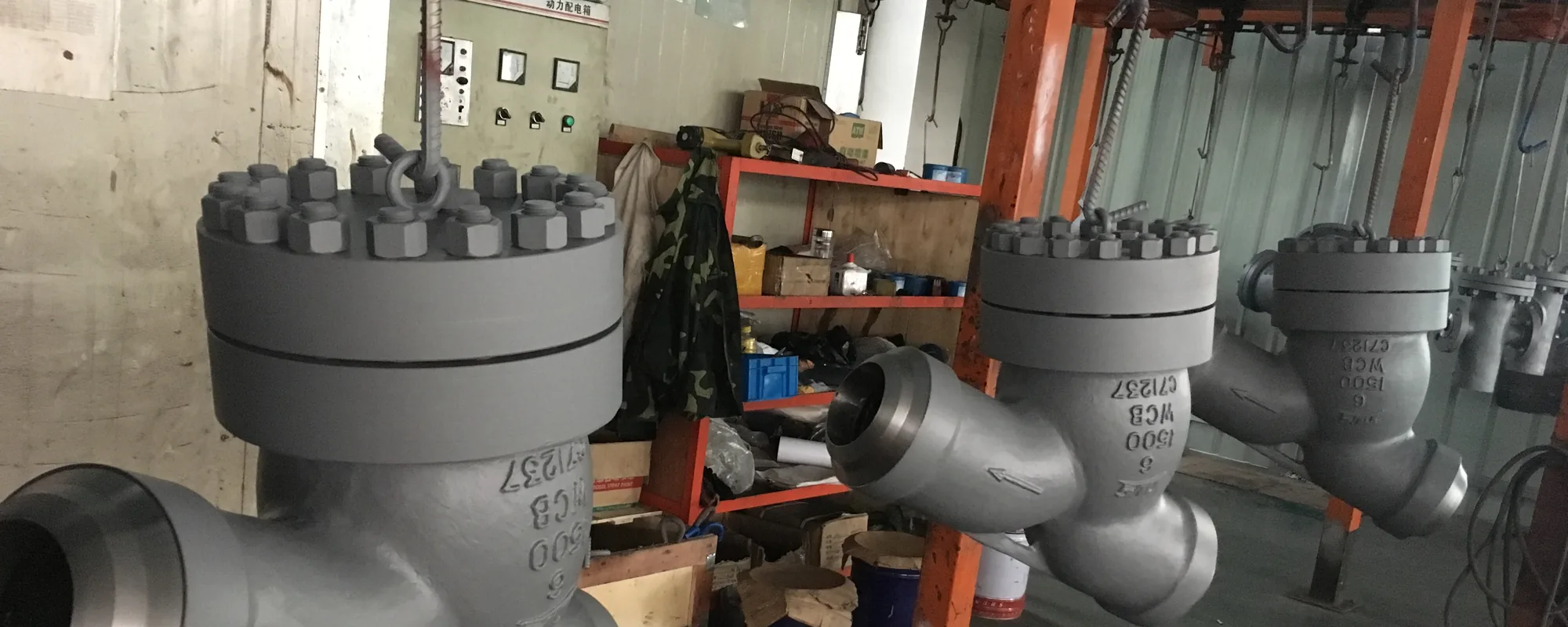
China high pressure valve factory for forged steel and power plant valves
This page is written for buyers evaluating Chinese suppliers for forged power plant valves - including buyers evaluating us. It covers what to specify, what to ask for, and which controls genuinely reduce risk.
The three questions that separate suppliers
1. Can you produce the pre-machining UT report?
Ultrasonic examination of a forging is performed before machining, because that is when the part can still be rejected economically. It cannot be produced retrospectively.
A supplier who cannot produce this report either did not perform it, or did not do the forging and did not receive the report from whoever did. This is the single most informative document to ask for on a forged valve order.
2. Can you produce the heat treatment charts?
Not a certificate stating that heat treatment was performed - the actual furnace trace, with thermocouple positions. On F91 and F92 this is decisive: over-tempering permanently destroys creep strength, the valve passes every visible test, and the failure appears years later.
3. Will you do PMI on every pressure part, not a sample?
Positive material identification is the only step in the chain that checks the metal rather than the paperwork. Sampling is cheaper and does not catch the single mixed part, which is exactly the failure mode PMI exists to prevent. F22 and F91 are visually identical.
These three questions cost nothing to ask and they filter the field quickly. Ask them of us too.
What to put in the specification
The common failure is a purchase order listing a dozen standards with no statement of what each governs. That looks thorough and controls nothing. State, per requirement, which standard applies:
| Requirement | State this |
|---|---|
| Rating and wall thickness | ASME B16.34, Standard or Special Class |
| Body construction | One-piece forged; welded pressure-boundary seams not permitted |
| Forging NDE | UT before machining to a named acceptance level, records submitted |
| Material certification | EN 10204 3.1 or 3.2 - decide before material is ordered |
| PMI | Every pressure-containing part, not sampled |
| PWHT | Charts per weld, plus hardness survey with acceptance range |
| Hardfacing | Alloy, method, number of layers, finished thickness, hardness, PT |
| Testing | API 598 or MSS SP-61 - name one; require actual duration on the report |
| Face-to-face | ASME B16.10 where tabulated; GA drawing elsewhere |
| Butt weld ends | ASME B16.25 prepared for a named pipe spec and schedule |
| Preservation | Specified for the actual expected site storage period |
A working process
- 01Send your specification and valve list
Not just size and class - medium, design pressure and design temperature
- 02Technical response, line by line
Comply / comply with clarification / cannot meet
- 03Mark up the ITP together
Hold points on the pressure tests at minimum
- 04GA drawing approval
Envelope and end preparation confirmed before manufacture
- 05Manufacture with records at each stage
Charts, reports and PMI, not just certificates
- 06Third-party inspection at the agreed points
Notified within the agreed period
- 07Document package review before release
Heat numbers cross-checked against the valve
The ranges we cover
And what we do not cover: cooling water, compressed air, general utility and control valves. A Chinese supplier offering the entire plant valve list from one factory is almost always consolidating other people's product, which is a legitimate business but a different one, and it should be stated rather than implied.
Frequently asked questions
Why buy forged power plant valves from China at all?
Cost and capacity, mainly - the Chinese forging and valve manufacturing base is large and genuinely capable at this product type. The risk is not capability, it is variability between suppliers, and the way to manage that is through the document package and the ITP rather than through the brochure.
How do I tell a manufacturer from a trading company?
Ask for the pre-machining UT report on the forging, the heat treatment charts, and the welding procedure qualification records. A trading company can obtain certificates. It usually cannot obtain furnace charts, because it was never in the room. This test is more reliable than a factory visit, which can be arranged anywhere.
What about quality risk on a Chinese-sourced valve?
It is real and it is manageable. The controls that work: a marked-up ITP agreed before the order with genuine hold points on the pressure tests, PMI on every pressure part rather than a sample, and a third-party inspector attending the tests. The controls that do not work: a long list of standards in the purchase order with no statement of what each governs.
Do you export directly?
Export arrangements, incoterms and documentation capability need to be stated with evidence rather than asserted. That information is pending on the company page. We would rather leave it blank than claim it.
Can you meet European PED requirements?
PED Module H or H1 is required for pressure equipment placed on the EU market, and it cannot be arranged after manufacture. If your project is in the EU, this must be in the enquiry. Our certification status is currently listed as unverified - see the certificates page.
Test us against this page
Send a specification and ask the three questions. If our answers are worse than another supplier's, that is useful information and you should act on it.